Packaging Waste = Hidden Cost
Most companies think waste is just environmental.
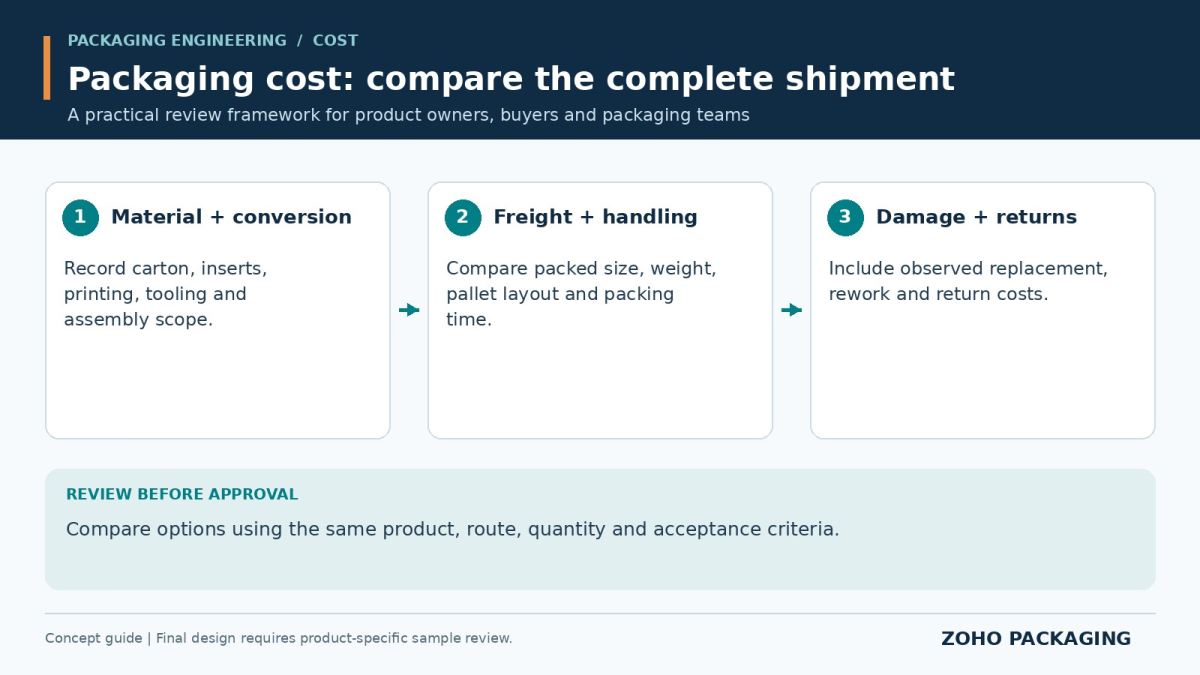 Compare options using the same product, route, quantity and acceptance criteria.
👉 It’s not.
👉 Waste = direct profit loss
Where Packaging Waste Comes From
❌ Oversized Packaging
Too much empty space → more material → higher shipping cost
❌ Over-Engineering
Too thick, too strong → unnecessary cost
❌ Inefficient Logistics
Poor pallet design → wasted space
❌ Mixed Materials
Hard to recycle → becomes waste
👉 Waste is not accidental
👉 It’s a design problem
What Reducing Waste Really Means
👉 Less material
👉 Less volume
👉 Less cost
👉 Without reducing protection
Our Waste Reduction Strategy
📦 1️⃣ Right-Sizing Packaging (Biggest Impact)
We eliminate:
- Empty space
- Oversized boxes
👉 Result:
- 20%–40% material reduction
- Lower shipping cost
🔧 2️⃣ Structural Optimization
Instead of:
❌ Adding more material
👉 We improve:
- Load paths
- Structural efficiency
👉 Result:
- Same strength
- Less material
🚛 3️⃣ Pallet & Logistics Optimization
We design for:
- Maximum pallet efficiency
- Container utilization
👉 Result:
- Less transportation waste
- Lower cost per unit
♻️ 4️⃣ Single-Material Design
We replace:
❌ Mixed materials
👉 With:
✅ Paper-based systems
👉 Result:
- Easier recycling
- Less landfill waste
📉 5️⃣ Reduce Packaging Layers
We simplify:
Product → packaging → shipment
👉 Instead of multiple layers
👉 Result:
- Less material
- Faster handling
- Lower cost
Before vs After
| Factor |
Before |
After |
| Material Usage |
High |
Reduced |
| Packaging Size |
Oversized |
Optimized |
| Waste |
High |
Lower |
| Cost |
High |
Reduced |
Real Impact
👉 20%–40% waste reduction
👉 15%–30% cost reduction
👉 Improved ESG performance
👉 Waste reduction = profit increase
Common Mistakes
❌ Cutting material without redesign
❌ Ignoring logistics
❌ Using eco material but oversized
❌ No system thinking
👉 Result: worse performance
Who Needs This Most
- Export manufacturers
- E-commerce brands
- Automotive suppliers
- ESG-driven companies
What You Get
✔ Waste reduction strategy
✔ Packaging redesign
✔ Cost optimization
✔ ESG improvement
♻️ Want to reduce packaging waste and cost together?
👉 Get a Free Waste Reduction Plan
📊 FAQ
Q1: What is packaging waste and why is it important?
Packaging waste refers to any unnecessary material, space, or inefficiency in a packaging system. This includes oversized boxes, excessive materials, and inefficient logistics. Reducing packaging waste is important because it directly impacts both environmental sustainability and business cost. By minimizing waste, companies can reduce material usage, lower shipping costs, and improve overall efficiency. This makes waste reduction a key strategy for both cost control and ESG compliance.
Q2: How can companies reduce packaging waste effectively?
Companies can reduce packaging waste by optimizing design, reducing material usage, and improving logistics efficiency. This includes right-sizing packaging, simplifying structure, and using single-material systems. A system-level approach ensures that waste reduction does not compromise performance. Engineering design plays a critical role in achieving effective results.
Q3: Does reducing packaging waste affect product safety?
Reducing packaging waste does not have to affect product safety if it is done correctly. By improving structural design and load distribution, companies can maintain or even improve protection while using less material. The key is to focus on efficiency rather than simply cutting materials. Proper engineering ensures that safety is not compromised.
Q4: What is the biggest source of packaging waste?
The biggest source of packaging waste is oversized packaging. Empty space increases material usage and shipping cost without adding value. This is often caused by using standard box sizes instead of custom designs. Eliminating unused space is one of the most effective ways to reduce waste.
Q5: How does logistics affect packaging waste?
Logistics plays a major role in packaging waste because inefficient pallet and container usage leads to wasted space. Poorly designed packaging reduces the number of units per shipment, increasing transportation cost and environmental impact. Optimizing packaging for logistics improves efficiency and reduces waste.
Q6: Can waste reduction lower packaging cost?
Yes, waste reduction directly lowers packaging cost by reducing material usage, shipping volume, and handling requirements. When packaging is optimized, companies can achieve significant cost savings. Waste reduction is one of the most effective ways to improve profitability.
Q7: What is single-material packaging and how does it reduce waste?
Single-material packaging uses one type of material, such as paper, instead of combining multiple materials. This simplifies recycling and reduces waste. Mixed-material packaging is difficult to process and often ends up in landfills. Single-material design improves recyclability and reduces environmental impact.
Q8: Why is over-engineering a problem?
Over-engineering uses more material than necessary, increasing cost and waste without improving performance. While it may provide a sense of safety, it reduces efficiency and increases environmental impact. Optimizing design ensures that packaging is strong enough without unnecessary excess.
Q9: How does reducing packaging layers help?
Reducing packaging layers simplifies the system, reduces material usage, and improves handling efficiency. Multiple layers often add unnecessary complexity and cost. By combining functions into fewer components, companies can achieve better efficiency and lower waste.
Q10: How can I start reducing packaging waste?
The first step is to analyze your current packaging system and identify inefficiencies. This includes reviewing material usage, packaging size, and logistics performance. Working with packaging engineers can help you develop effective solutions and implement improvements that deliver both cost savings and sustainability benefits.