E-commerce Packaging Has a Bigger Problem
👉 Volume = Waste × Cost
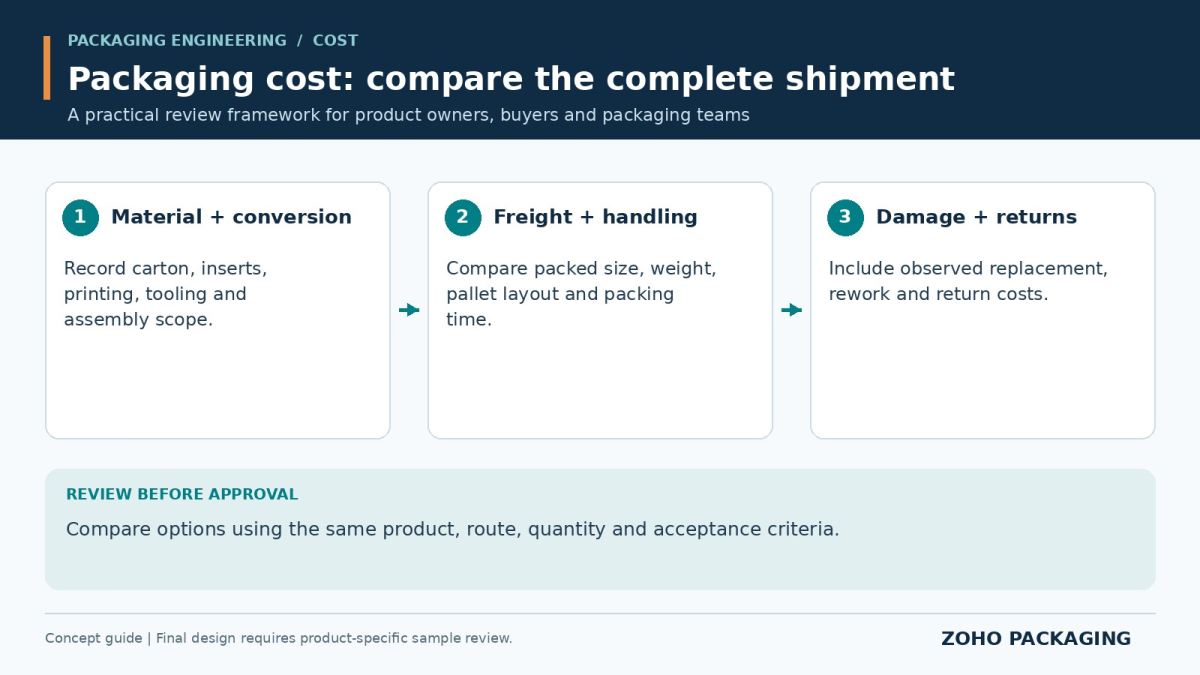 Compare options using the same product, route, quantity and acceptance criteria.
E-commerce means:
- High shipping frequency
- High packaging consumption
- High return rates
👉 Small inefficiency = massive cost
The Hidden Cost in E-commerce Packaging
Most brands lose money on:
- Oversized boxes
- Excess fillers (bubble wrap / foam)
- Poor product fit
- High damage rate
👉 Result:
- High shipping cost
- High waste
- Poor customer experience
What Sustainable E-commerce Packaging Really Means
👉 It’s NOT just eco material
👉 It’s:
- Smaller packaging
- Better structure
- Higher efficiency
👉 Sustainability = efficiency at scale
Our E-commerce Packaging Strategy
📦 1️⃣ Right-Sizing (Critical)
We design packaging to:
- Fit product precisely
- Eliminate empty space
👉 Result:
- Lower dimensional weight
- Reduced shipping cost
🛡️ 2️⃣ Damage Reduction Design
We reduce:
- Product movement
- Impact damage
- Return rate
👉 Result:
♻️ 3️⃣ Replace Plastic Fillers
We replace:
❌ Bubble wrap
❌ Foam
👉 With:
- Paper cushioning
- Corrugated inserts
👉 Result:
- Fully recyclable
- Better brand perception
🚛 4️⃣ Shipping Efficiency Optimization
We optimize:
- Box size
- Weight
- Pallet efficiency
👉 Result:
- More units per shipment
- Lower cost per order
📉 5️⃣ Reduce Packaging Layers
Traditional:
Product → inner box → outer box → fillers
👉 We simplify:
Product → optimized structure
👉 Result:
- Less material
- Faster packing
- Lower cost
Before vs After
| Factor |
Before |
After |
| Packaging Size |
Oversized |
Optimized |
| Shipping Cost |
High |
Reduced |
| Damage Rate |
High |
Lower |
| Waste |
High |
Reduced |
Real Impact
👉 20%–40% packaging cost reduction
👉 15%–30% shipping savings
👉 Reduced return rate
👉 Improved customer experience
Why This Matters for E-commerce
👉 High volume × small savings = huge profit
👉 Example:
Saving $1 per shipment
= $100,000/year (100K orders)
Common Mistakes
❌ Using standard box sizes
❌ Adding more filler instead of redesign
❌ Ignoring dimensional weight
❌ No damage control strategy
👉 Result: cost explosion
Who Needs This Most
- Shopify brands
- Amazon sellers
- DTC brands
- Subscription box companies
What You Get
✔ E-commerce packaging design
✔ Cost reduction strategy
✔ Damage reduction system
✔ Sustainable packaging solution
CTA
📦 Want to reduce shipping cost & returns?
👉 Get a Free E-commerce Packaging Optimization Plan
📊 FAQ
Q1: What is sustainable packaging for e-commerce?
Sustainable packaging for e-commerce refers to designing packaging systems that reduce environmental impact while improving efficiency and cost performance. This includes minimizing packaging size, reducing material usage, improving recyclability, and optimizing logistics. The goal is to create a packaging solution that supports high-volume shipping while maintaining product protection and reducing waste.
Q2: How can packaging reduce e-commerce shipping cost?
Packaging can reduce shipping cost by minimizing size and weight, which lowers dimensional weight and freight charges. By optimizing box dimensions and eliminating unnecessary space, companies can increase the number of units per shipment and reduce cost per order. Efficient packaging design is one of the most effective ways to control logistics expenses in e-commerce.
Q3: Why is oversized packaging a problem in e-commerce?
Oversized packaging increases shipping cost because it raises dimensional weight and reduces efficiency. It also requires more material and creates more waste. Additionally, larger packages allow more internal movement, increasing the risk of damage. Right-sizing packaging addresses all these issues.
Q4: Can sustainable packaging reduce return rates?
Yes, sustainable packaging can reduce return rates when it is designed to improve product protection. By eliminating internal movement and improving shock absorption, packaging can prevent damage during shipping. Lower damage rates lead to fewer returns and improved customer satisfaction.
Q5: What is the best alternative to bubble wrap for e-commerce?
The best alternatives to bubble wrap include paper cushioning, honeycomb paper, and corrugated inserts. These materials can provide effective protection while being recyclable and more sustainable. However, proper design is essential to ensure performance.
Q6: How does packaging affect customer experience?
Packaging affects customer experience by influencing product condition upon arrival and brand perception. Well-designed packaging ensures that products arrive safely and creates a positive impression. Sustainable packaging can also enhance brand image by demonstrating environmental responsibility.
Q7: What industries benefit most from e-commerce packaging optimization?
Any business that relies on direct-to-consumer shipping benefits from e-commerce packaging optimization. This includes retail brands, subscription services, and online marketplaces. High-volume operations see the greatest impact from small improvements.
Q8: Can sustainable packaging scale with business growth?
Yes, sustainable packaging can be designed to scale with business growth. By standardizing packaging systems and optimizing design, companies can maintain efficiency as order volume increases. Scalable solutions ensure long-term performance.
Q9: What is the biggest mistake in e-commerce packaging?
The biggest mistake is using standard packaging without considering product fit and shipping efficiency. This leads to oversized packaging, higher cost, and increased damage risk. Custom design is essential for optimization.
Q10: How can I improve my e-commerce packaging?
Improving e-commerce packaging starts with analyzing current performance, including cost, damage rate, and efficiency. Identifying inefficiencies and redesigning packaging based on engineering principles can deliver significant improvements. Working with experts helps ensure effective implementation.