Sustainability That Actually Works
👉 Not Just Marketing — Real Results
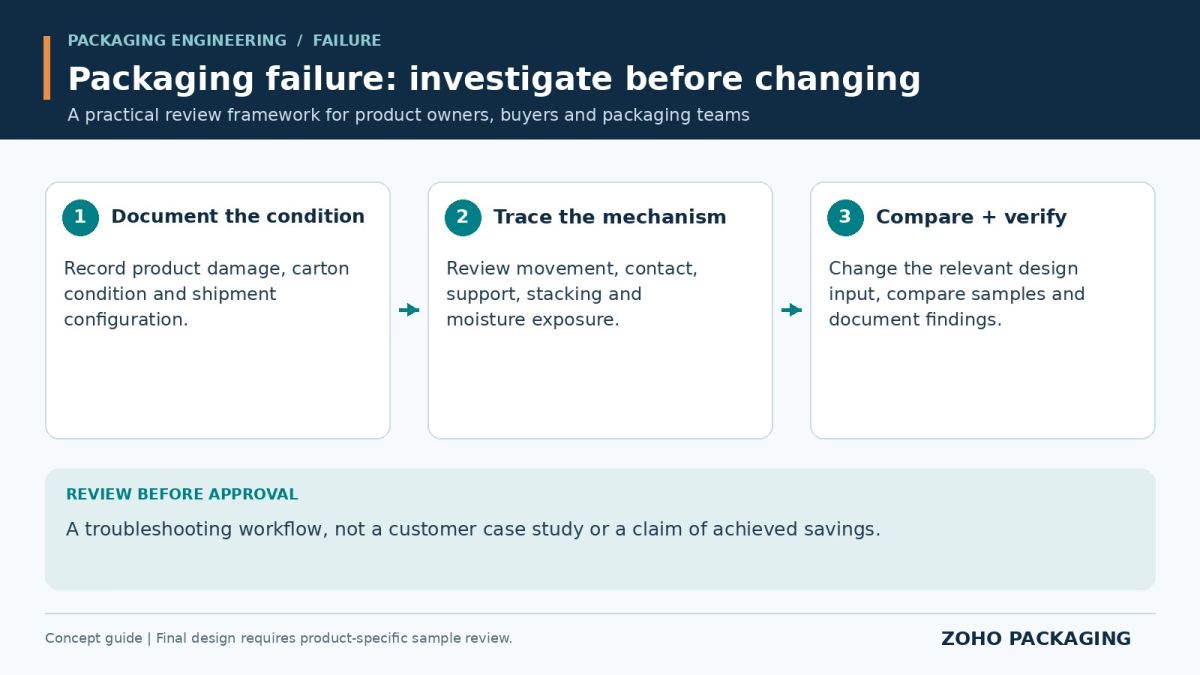 A troubleshooting workflow, not a customer case study or a claim of achieved savings.
Anyone can say:
❌ “We are eco-friendly”
❌ “We use sustainable materials”
👉 But what matters is:
✅ Cost reduction
✅ Waste reduction
✅ Real performance
Case Study #1 — Plastic-Free Transition (E-commerce Brand)
Problem:
- Heavy use of bubble wrap & foam
- High packaging waste
- Negative brand perception
Before:
- Plastic usage: High
- Waste volume: High
- Customer feedback: Neutral
Solution:
- Replaced plastic with paper cushioning
- Designed corrugated inserts
- Simplified packaging structure
After:
- Plastic usage: 0%
- Waste reduction: 40%+
- Brand perception: Improved
👉 Result: Plastic-free + cost optimized
Case Study #2 — Packaging Size Reduction
Problem:
- Oversized boxes
- High shipping cost
- Low pallet efficiency
Before:
- Units per shipment: 800
- Shipping cost: High
- Empty space: Significant
Solution:
- Right-sizing design
- Product-fit packaging
- Internal structure optimization
After:
- Units per shipment: 1000
- Shipping cost: Reduced
- Efficiency: Improved
👉 Result: 25%+ logistics savings
Case Study #3 — Material Optimization (Corrugated)
Problem:
- Over-engineered packaging
- Excess material usage
- High cost
Before:
- Board thickness: Over-spec
- Material cost: High
- Weight: Heavy
Solution:
- Structural redesign
- Board grade optimization
- Load path engineering
After:
- Material reduction: 20%–30%
- Weight reduction: Significant
- Performance: Maintained
👉 Result: Lower cost + same strength
Case Study #4 — Waste Reduction System
Problem:
- Mixed materials (plastic + paper)
- Difficult recycling
- High waste disposal cost
Before:
- Recycling rate: Low
- Waste handling cost: High
- ESG compliance: Weak
Solution:
- Single-material packaging system
- Paper-based design
- Simplified structure
After:
- Recyclability: High
- Waste reduction: Significant
- ESG compliance: Strong
👉 Result: Full recyclable system
Case Study #5 — Lightweight Packaging
Problem:
- Heavy packaging
- High freight cost
- Low efficiency
Before:
- Packaging weight: High
- Cost per shipment: High
Solution:
- Structural optimization
- Material reduction
- Size optimization
After:
- Weight reduction: 10%–30%
- Shipping cost: Reduced
- Efficiency: Improved
👉 Result: Direct cost savings
Before vs After Summary
| Factor |
Before |
After |
| Material Usage |
High |
Reduced |
| Packaging Size |
Oversized |
Optimized |
| Waste |
High |
Lower |
| Cost |
High |
Reduced |
| ESG Performance |
Weak |
Strong |
What All Successful Cases Have in Common
👉 Not “eco materials” alone
👉 Not higher cost
👉 Better engineering design
What This Means for You
If you are experiencing:
- High packaging cost
- Excess waste
- ESG pressure
- Shipping inefficiency
👉 You don’t need new materials
👉 You need better design
🌱 Want results like these?
👉 Send us your case → Get a Free Eco Packaging Analysis
📊 FAQ
Q1: Why are eco packaging case studies important?
Eco packaging case studies provide real-world evidence of how sustainable packaging solutions can reduce cost, waste, and environmental impact. They demonstrate practical applications of engineering design and show measurable results. This helps companies understand what is achievable and how similar strategies can be applied to their own packaging systems. Case studies also reduce uncertainty by providing proven examples.
Q2: Can sustainable packaging really reduce cost?
Yes, sustainable packaging can reduce cost when it is based on efficient design. By reducing material usage, optimizing size, and improving logistics efficiency, companies can lower total cost. While some eco materials may have higher unit prices, the overall system cost is often lower due to improved efficiency and reduced waste. The key is to focus on total cost rather than individual components.
Q3: What is the most common improvement seen in these cases?
The most common improvement is a reduction in material usage and shipping cost. Many companies discover that their packaging is oversized or over-engineered. By optimizing design, they can reduce both material and logistics costs while maintaining performance. This leads to significant overall savings.
Q4: Are these results typical or exceptional?
These results are typical when proper engineering principles are applied. While exact numbers may vary depending on the product and logistics conditions, most companies can achieve meaningful improvements in cost and efficiency. Sustainable packaging is not about achieving extreme results but about consistent optimization.
Q5: Can small changes really have a big impact?
Yes, small changes can have a large impact when applied across high volumes. For example, reducing packaging size slightly can increase units per shipment and lower cost per unit. Over time, these improvements accumulate into significant savings. This is especially true for e-commerce and export businesses.
Q6: Do I need to change all my packaging at once?
No, it is not necessary to change all packaging at once. Companies can start with high-impact areas, such as products with high shipping cost or high waste. Gradual implementation allows for testing and adjustment, reducing risk and ensuring smooth transition. This approach also helps manage cost.
Q7: What industries benefit most from eco packaging?
Industries with high shipping volumes or strict sustainability requirements benefit the most. This includes e-commerce, automotive, electronics, and industrial products. These industries can achieve significant cost savings and environmental benefits through optimization.
Q8: How does eco packaging improve brand value?
Eco packaging improves brand value by demonstrating a commitment to sustainability and environmental responsibility. Customers and business partners increasingly prefer brands that adopt eco-friendly practices. This can enhance brand image and provide a competitive advantage.
Q9: What is the biggest takeaway from these case studies?
The biggest takeaway is that sustainability and cost reduction can be achieved together through proper design. Eco packaging is not about adding cost but about improving efficiency. Companies that adopt this approach gain both financial and environmental benefits.
Q10: How can I start implementing eco packaging solutions?
The best way to start is by analyzing your current packaging system and identifying inefficiencies. This includes reviewing material usage, packaging size, and logistics performance. Working with experienced packaging engineers can help you develop effective solutions and implement changes that deliver measurable results.