Article
2026/04/08
Eco-Friendly Food Packaging Solutions | Sustainable & Cost-Efficient Packaging for Food Brands
Eco-Friendly Food Packaging Is Not About Being Green — It’s About Being Smarter
Most brands think “eco-friendly packaging” means:
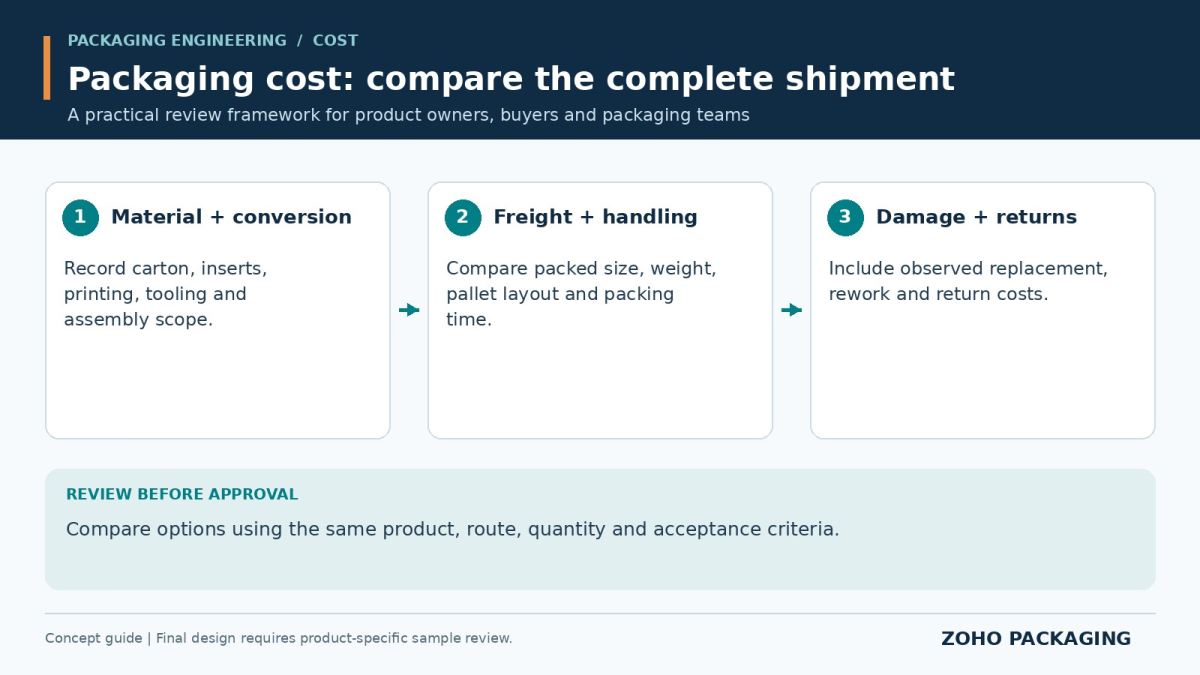 Compare options using the same product, route, quantity and acceptance criteria.
→ Using kraft paper
→ Removing plastic
→ Adding a green label
That’s not wrong.
But it’s incomplete.
Real eco-friendly packaging is engineering-driven.
It answers 3 core business problems:
- How to reduce packaging cost
- How to reduce damage during shipping
- How to improve brand perception
If your packaging only looks eco—but fails in logistics or cost—you’re losing money.
👉 Sustainable packaging should increase profit, not just reduce plastic.
What Is Eco-Friendly Food Packaging (From an Engineering Perspective)
Eco-friendly food packaging is not a material choice.
It’s a system design.
It includes:
- Material selection (recyclable / biodegradable / FSC paper)
- Structural design (reduce material while maintaining strength)
- Logistics optimization (reduce shipping volume)
- Manufacturing efficiency (lower production waste)
Key Principle
The most sustainable packaging is the one that uses less material AND prevents damage.
Types of Eco-Friendly Food Packaging Solutions
1. Recyclable Corrugated Packaging (Most Practical)
- 100% recyclable
- Strong enough for stacking & shipping
- Cost-efficient for mass production
👉 Best for:
- FMCG products
- Snacks
- packaged dry food
2. Plastic-Free Packaging (Brand Driven)
- Replace plastic inserts with paper structure
- Use molded pulp instead of foam
👉 Best for:
- premium brands
- ESG-focused companies
3. Lightweight Packaging
Reducing weight = reducing cost
- Lower shipping cost
- Lower material cost
- Lower carbon footprint
👉 This is where most companies gain real ROI
4. Mono-Material Packaging (Recycling Friendly)
- Single material structure
- Easier recycling process
- Better compliance with global regulations
The Biggest Mistake Brands Make
Most companies do this:
👉 Switch to eco material
👉 Increase cost
👉 Reduce strength
👉 Get more damage
Result:
❌ Higher return rate
❌ Customer complaints
❌ Increased total cost
Reality
Eco-friendly packaging that increases damage is NOT sustainable.
The Right Approach: Engineering-Driven Sustainability
At Zoho Packaging, we approach eco packaging like this:
Step 1 — Analyze Product & Risk
- Weight
- Fragility
- shipping method
- stacking condition
Step 2 — Optimize Structure
Instead of adding material, we redesign:
- load-bearing structure
- internal support
- pressure distribution
Step 3 — Reduce Material
Once structure is optimized:
- reduce thickness
- reduce layers
- remove unnecessary components
Step 4 — Validate Performance
We simulate:
- drop test
- stacking test
- transport vibration
Result
✔ Less material
✔ Lower cost
✔ Better protection
Eco Packaging for Different Food Categories
Dry Food (Snacks / Powder / Tea)
- Folding carton + corrugated shipper
- Lightweight optimization
- Print-friendly for branding
Frozen Food Packaging
Key challenge:
👉 Moisture + low temperature
Solution:
- moisture-resistant corrugated board
- reinforced structure for stacking
Takeaway & Delivery Packaging
Key challenge:
👉 frequent handling + compression
Solution:
- reinforced bottom structure
- anti-collapse design
- grease-resistant coating
Retail-Ready Packaging (RRP / SRP)
Eco + efficiency combined:
- display + shipping in one box
- no repacking needed
- reduces labor cost
-
Cost vs Sustainability — The Truth
Many brands think:
“Eco packaging is more expensive”
Not necessarily.
Where Cost Is Actually Saved:
1. Reduced Material Usage
Less board = lower cost
2. Lower Shipping Cost
Better carton size → more units per pallet
3. Reduced Damage Rate
Less returns = higher profit
Real Equation
Sustainable packaging = Lower total cost per delivered product
Case Example (Typical Scenario)
Before:
- Overdesigned packaging
- High material cost
- inefficient pallet loading
- damage rate: 3–5%
-
After optimization:
- reduced board thickness
- improved structure
- optimized pallet layout
-
Result:
✔ Packaging cost -18%
✔ Shipping cost -12%
✔ Damage rate ↓ to <1%
Why Food Brands Choose Engineering-Based Eco Packaging
Because they don’t want:
- “green marketing only”
- unstable packaging
- hidden logistics costs
-
They want:
✔ Predictable cost
✔ Stable supply
✔ Scalable production
✔ Real sustainability
Why Work With a Taiwan Packaging Supplier
Compared to typical suppliers:
Taiwan Advantage:
- Strong engineering capability
- Stable quality control
- better communication (vs China factories)
- flexible MOQ
-
Zoho Positioning
We are not just a packaging supplier.
👉 We are a packaging engineering partner
Final Insight
Eco-friendly packaging is not about removing plastic.
It’s about:
Designing smarter systems that reduce waste, cost, and risk at the same time.
FAQ
1. What is eco-friendly food packaging?
Eco-friendly food packaging refers to packaging designed to reduce environmental impact through recyclable materials, reduced waste, and optimized structure. It’s not just about materials—it includes cost, logistics, and durability.
2. Is sustainable packaging more expensive?
Not necessarily. While material cost may increase slightly, overall cost can decrease due to lower shipping fees, reduced damage, and improved efficiency.
3. What materials are used in eco food packaging?
Common materials include corrugated cardboard, kraft paper, molded pulp, and recyclable coatings. The key is using materials that balance strength and sustainability.
4. Can eco packaging protect food products effectively?
Yes—if engineered correctly. Structural design is more important than material thickness. Proper design ensures protection while reducing material use.
5. What is plastic-free packaging?
Plastic-free packaging replaces plastic components with paper-based or biodegradable materials. It’s commonly used for branding and ESG compliance.
6. What is lightweight packaging?
Lightweight packaging reduces material weight without sacrificing strength. It lowers shipping cost and environmental impact.
7. How does packaging affect food shipping costs?
Packaging size and weight directly impact freight cost. Optimized packaging can significantly reduce shipping expenses.
8. What is mono-material packaging?
Mono-material packaging uses a single type of material, making recycling easier and improving sustainability compliance.
9. Is eco packaging suitable for frozen food?
Yes, but it requires moisture-resistant materials and reinforced structures to handle low temperatures and stacking pressure.
10. How do I start switching to eco-friendly packaging?
Start by analyzing your current packaging performance, then redesign structure and materials with an engineering approach rather than simply replacing materials.