Export Packaging Is Not Packaging
It’s Risk Management
When your product is shipped internationally, it faces:
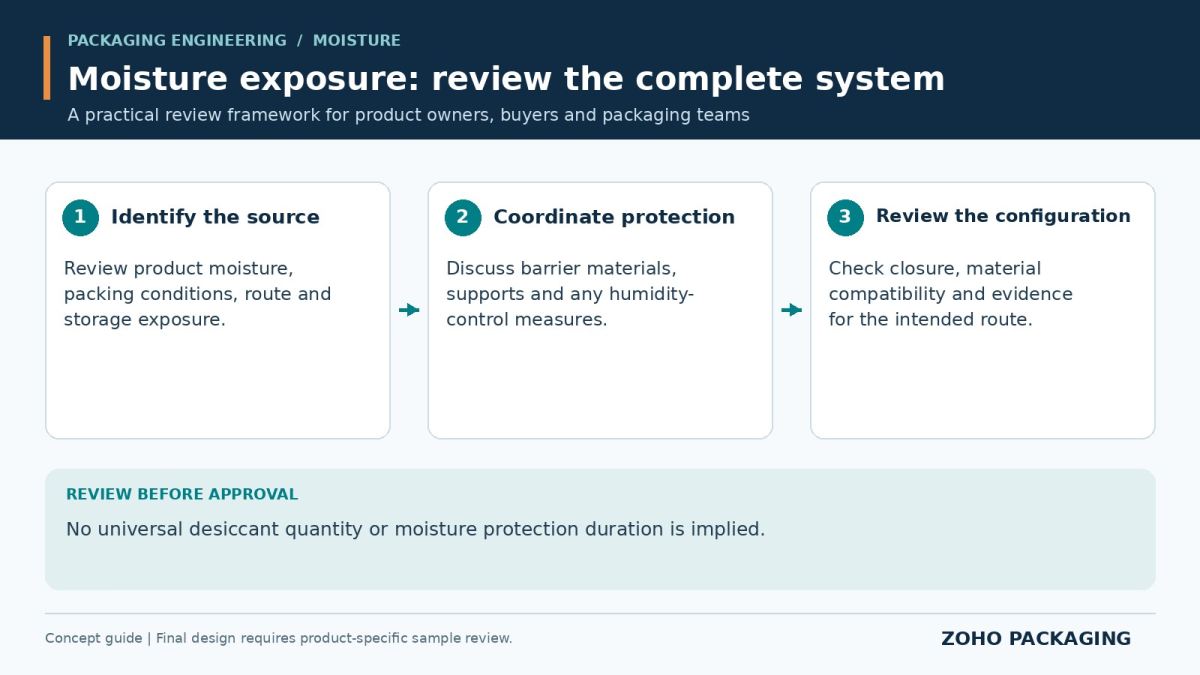 No universal desiccant quantity or moisture protection duration is implied.
- long transit time
- multiple handling points
- humidity & temperature changes
- stacking pressure
👉 If your packaging fails:
- product damage
- customs delays
- customer complaints
- brand loss
Reality
Export packaging is not about boxes
It’s about protecting your profit across thousands of kilometers
What Makes Export Packaging Different?
1. Long-Term Stacking Pressure
- weeks in container
- multiple layers
👉 requires accurate BCT calculation
2. High Humidity (Sea Freight)
- moisture weakens cartons
- reduces strength
👉 up to 50% strength loss
3. Multiple Handling Points
- loading
- unloading
- transfer
👉 repeated impact risk
4. Vibration During Transport
👉 continuous stress on structure
Conclusion
Export packaging must survive a system—not just a test
Common Export Packaging Failures
❌ Carton Collapse
- incorrect stacking design
- insufficient BCT
❌ Moisture Damage
- weak material selection
- no humidity consideration
❌ Internal Movement
- poor cushioning
- no fixing structure
❌ Over-Packaging
- excessive cost
- inefficient loading
Export Packaging Engineering Approach
Step 1 — Product Risk Analysis
Step 2 — Structural Design
- load-bearing structure
- reinforcement strategy
Step 3 — Material Selection
- correct corrugated board
- moisture resistance
Step 4 — Cushioning Design
- shock absorption
- internal fixation
Step 5 — Logistics Optimization
- pallet layout
- container loading
Step 6 — Testing & Validation
- drop test
- compression test
- ISTA simulation
Result
✔ stable export performance
✔ reduced damage rate
✔ optimized total cost
Export Packaging Materials
Corrugated Packaging
- most common
- cost-effective
- recyclable
Wooden Crates
- heavy duty products
- industrial equipment
- UN packaging
Molded Pulp / Paper Cushioning
- eco-friendly
- replaces foam
Heavy Duty Export Packaging
For:
- machinery
- automotive parts
- industrial equipment
Key Design Elements:
- reinforced structure
- load distribution
- corner protection
👉 strength is built—not added
Export Packaging vs Domestic Packaging
| Domestic Packaging |
Export Packaging |
| short distance |
long distance |
| low humidity |
high humidity |
| limited handling |
multiple handling |
| low risk |
high risk |
Key Insight
Export packaging must handle worst-case scenarios
Real Case — Export Damage Reduction
Before
- standard carton used
- no export design
- damage rate: 4%
After
- BCT calculation applied
- structure optimized
- moisture-resistant material
Result
✔ damage rate ↓ to <1%
✔ cost optimized
✔ stable export performance
Export Packaging Cost — The Truth
Most companies think:
👉 export packaging = higher cost
Reality:
✔ better design → less damage
✔ better loading → lower shipping cost
Final Equation
Good export packaging reduces total cost
Why Companies Choose Engineering-Based Export Packaging
They want:
✔ predictable performance
✔ lower risk
✔ scalable system
✔ long-term cost control
👉 Not just “boxes”
Zoho Export Packaging Positioning
We are not just a supplier.
👉 We are a packaging engineering partner for global shipping
What We Deliver
- export packaging design
- structural engineering
- logistics optimization
- testing validation
What You Gain
✔ lower damage rate
✔ optimized shipping cost
✔ global-ready packaging system
Who Needs Export Packaging the Most?
- exporters
- e-commerce sellers
- manufacturers
- industrial suppliers
👉 If your product crosses borders, this is critical.
Final Insight
Most companies think export packaging is about protection.
Smart companies understand:
Export packaging is about controlling risk, cost, and reputation at the same time.
FAQ
1. What is export packaging?
Export packaging is designed to protect products during international shipping, considering long transit time, humidity, and handling.
2. Why is export packaging different from domestic packaging?
Because it must handle longer transport, harsher conditions, and higher risk environments.
3. How can I prevent damage during export?
Use engineering-based packaging design, including BCT calculation, cushioning, and testing.
4. Does export packaging increase cost?
Not necessarily. It reduces total cost by lowering damage and improving shipping efficiency.
5. What materials are used in export packaging?
Corrugated boxes, wooden crates, and molded pulp are commonly used depending on product needs.
6. How does humidity affect packaging?
Humidity weakens paper strength, reducing compression resistance significantly.
7. Do I need testing for export packaging?
Yes. Testing ensures packaging can withstand real-world transport conditions.
8. What industries need export packaging?
Manufacturing, electronics, food, and heavy equipment industries all require it.
9. What is heavy duty export packaging?
It refers to reinforced packaging designed for large, heavy, or fragile products.
10. How do I choose the right export packaging solution?
Start with product analysis, then design structure, select materials, and validate through testing.