If You Ship Lithium Batteries — Packaging Is Your Biggest Risk
Lithium batteries are among the most regulated products in global logistics.
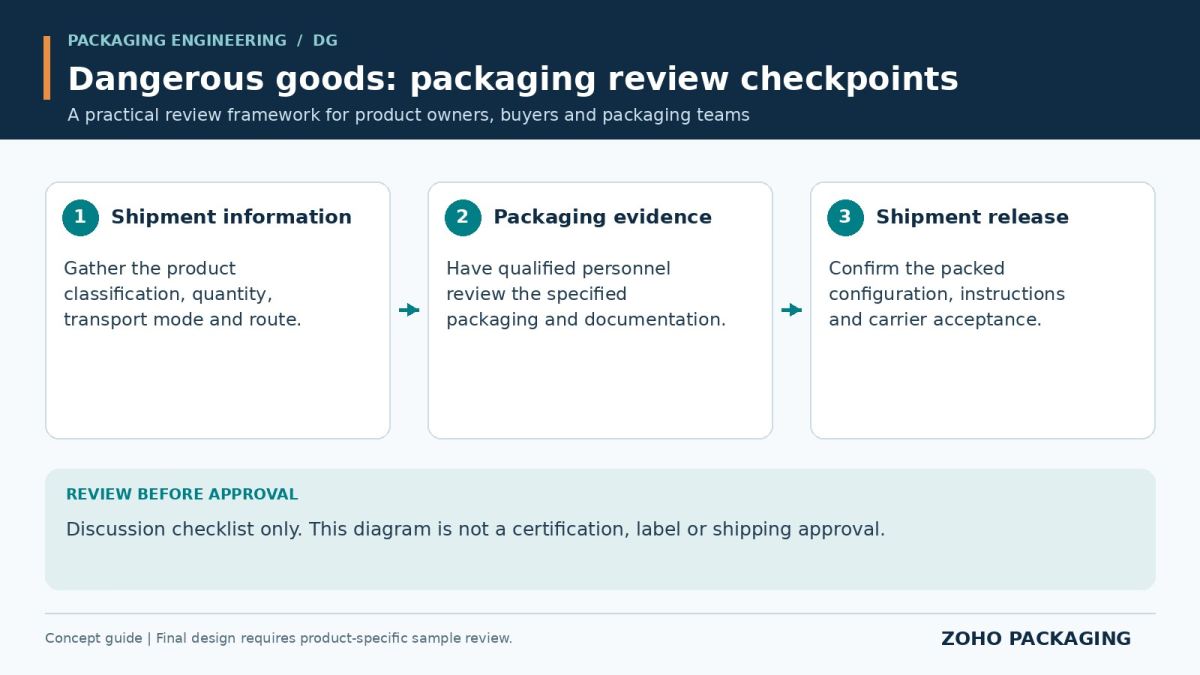 Discussion checklist only. This diagram is not a certification, label or shipping approval.
But here’s the reality:
👉 Most shipment failures are not caused by the battery
👉 They are caused by packaging and compliance mistakes
Understanding UN3480 vs UN3090
| Code |
Type |
| UN3480 |
Lithium-ion batteries |
| UN3090 |
Lithium metal batteries |
Each requires:
- Different handling
- Different packaging logic
- Correct labeling
👉 Getting this wrong = shipment rejection
The Biggest Mistake Exporters Make
Many believe:
👉 “Under 100Wh = no UN packaging needed”
But in real-world logistics:
- Airlines may still require UN packaging
- Customers may demand full compliance
- Quantity limits still apply
👉 Wrong assumption = delay or rejection
What Proper Lithium Battery Packaging Must Do
A compliant system must:
✔ Prevent short circuit
✔ Fix battery position (no movement)
✔ Absorb shock and vibration
✔ Use UN certified outer packaging
✔ Include correct labels and documentation
Why Most Shipments Fail
Common problems:
❌ Only using foam (no structure)
❌ Wrong UN box selection
❌ No internal fixation
❌ Incorrect labeling
👉 Even with a UN box, you can still fail
Engineering Approach (This Is the Difference)
At Zoho Packaging, we design a full system:
1. Battery Risk Assessment
→ Type, capacity, quantity, shipping method
2. Internal Protection Design
→ Cushioning + fixation + anti-movement
3. Packaging Selection
→ UN 4G box or wooden crate
4. Compliance Setup
→ Labels, documentation, transport match
UN 4G vs Wooden Crate
| Factor |
UN 4G Box |
Wooden Crate |
| Cost |
Lower |
Higher |
| Protection |
Medium |
Maximum |
| Weight |
Light |
Heavy |
| Application |
Small/medium batteries |
Large systems |
Real Business Impact
Correct packaging helps you:
✔ Pass inspections faster
✔ Reduce rejection risk
✔ Lower damage rate
✔ Improve customer trust
Zoho One-Line
👉 Lithium battery shipping doesn’t fail because it’s dangerous — it fails because it’s misunderstood.
Not sure if your packaging is compliant?
Send your battery specs and shipping method.
👉 We’ll design a packaging system that passes inspection — not just looks correct.
FAQ
1. Do lithium batteries always require UN packaging?
Not always, but in most real-world shipping conditions, they do. While some small batteries under 100Wh may qualify for exceptions, many carriers and customers still require full UN-compliant packaging. Factors such as shipping method, quantity, and destination all affect the requirement. Assuming exemption without verification is risky and often leads to shipment rejection. Using proper UN packaging ensures compliance and reduces overall risk.
2. What is the difference between UN3480 and UN3090?
UN3480 refers to lithium-ion batteries, which are rechargeable and commonly used in electronics and energy systems. UN3090 refers to lithium metal batteries, which are non-rechargeable and used in specific industrial or medical applications. Each type has different regulations, packaging requirements, and labeling standards. Misclassification can result in incorrect documentation and shipment delays.
3. Can I ship lithium batteries with standard packaging?
No. Standard packaging does not meet the safety and compliance requirements for lithium batteries. Proper packaging must include a UN-certified outer box, internal protection, and correct labeling. Without these, shipments are likely to be rejected or damaged during transport. Compliance is essential for safe and legal shipping.
4. What is UN 4G packaging for lithium batteries?
UN 4G packaging is a fiberboard box that has passed UN certification tests, including drop and stacking tests. It is commonly used for lithium batteries because it provides a balance between cost and compliance. However, the internal packaging system must also be properly designed to ensure full protection and compliance.
5. When should I use a wooden crate for lithium batteries?
Wooden crates are recommended for large, heavy, or high-value battery systems. They provide superior strength and structural stability compared to fiberboard boxes. If the battery system is heavy or sensitive, a wooden crate offers better protection and reduces the risk of damage during shipping.
6. Why do lithium battery shipments get rejected?
Most rejections are due to packaging or documentation errors. Common issues include incorrect labels, missing UN certification, poor internal protection, and incorrect classification. Even small mistakes can result in delays or rejection. Proper packaging design helps prevent these problems.
7. What tests must lithium battery packaging pass?
UN packaging must pass drop tests, stacking tests, and sometimes vibration or compression tests. These tests simulate real-world shipping conditions and ensure the packaging can protect the product. Passing these tests is required for compliance and safety.
8. Does packaging affect shipping cost?
Yes. While better packaging may have a higher upfront cost, it reduces the risk of damage, delays, and returns. This lowers the total cost of shipping. Poor packaging may seem cheaper but often results in higher overall expenses due to failures.
9. How can I ensure my packaging is compliant?
You need to evaluate your packaging system based on product specifications, shipping conditions, and regulatory requirements. This includes checking UN ratings, internal structure, and labeling. Working with an experienced provider helps ensure compliance and reduces risk.
10. Can I reduce packaging cost without increasing risk?
Yes. Cost optimization should focus on structural design and correct material selection, not just reducing material. A well-designed packaging system can achieve both protection and efficiency, reducing total logistics cost without compromising safety.