Single Wall vs Double Wall Corrugated Boxes
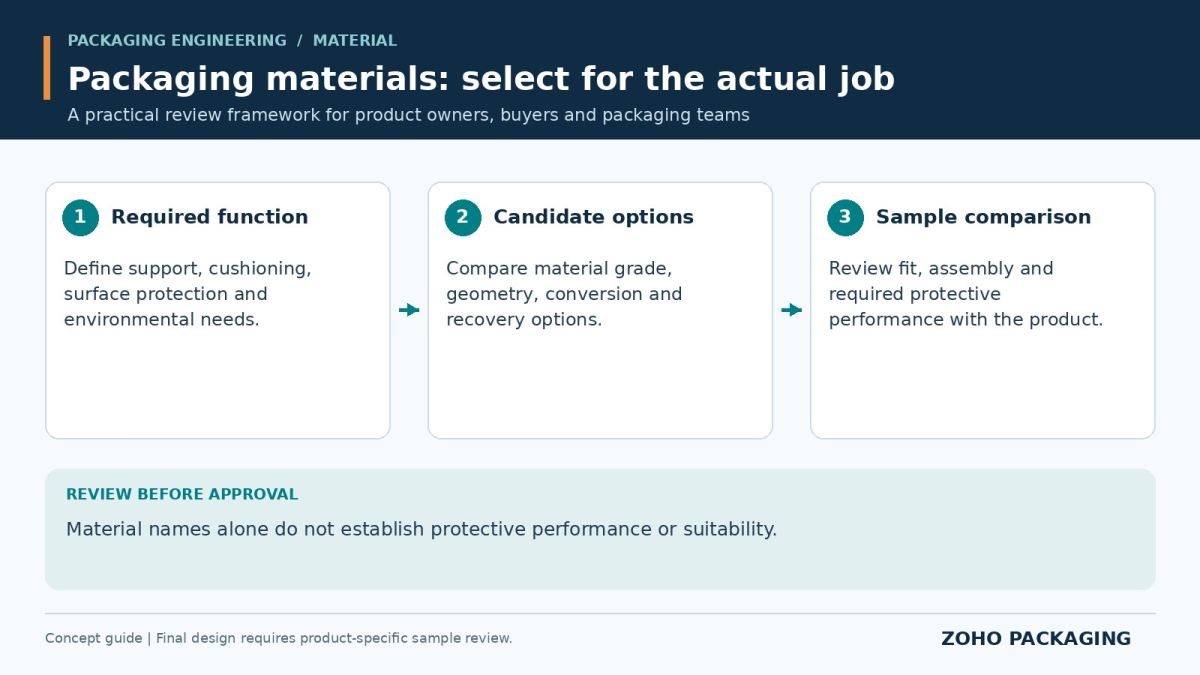 Material names alone do not establish protective performance or suitability.
Most buyers ask the wrong question:
“Should I use single wall or double wall?”
The real question is:
“Which structure prevents loss in my actual shipping conditions?”
Because choosing the wrong box is not just a packaging mistake.
It is a profit leak.
The Basic Difference (But Not the Whole Story)
Single Wall Corrugated Box
- One layer of fluting
- Lightweight
- Lower cost per unit
- Suitable for light products or short-distance shipping
Double Wall Corrugated Box
- Two layers of fluting
- Higher compression strength
- Better stacking performance
- Designed for heavier products or export
But here is the truth most suppliers will not tell you:
Material alone does not solve packaging failure.
Structure does.
Why Many Single Wall Boxes Fail
Single wall boxes are often used because they are cheaper.
But in real operations, they fail when:
- Products are heavier than expected
- Stacking height increases
- Shipping distance is long
- Humidity weakens the board
- Internal movement is not controlled
Result:
- Carton collapse
- Deformation
- Product damage
- Increased returns
Saving a few cents per box can cost thousands in losses.
Why Double Wall Is Not Always the Answer
Many buyers upgrade to double wall thinking it solves everything.
It does not.
If the design is wrong, even double wall boxes will:
- Collapse under uneven load
- Waste space due to poor sizing
- Increase shipping cost unnecessarily
- Still allow product movement inside
Double wall without design = expensive guess
The Real Decision Framework
Instead of asking “single or double,”
you should evaluate:
1. Product Weight
Heavy products require higher compression strength.
2. Stacking Height
More stacking = more vertical pressure.
3. Shipping Distance
Export shipments require stronger structures.
4. Handling Risk
More handling = more impact risk.
5. Internal Stability
Movement inside the box can destroy products even if the box survives.
When Single Wall Is Enough
Single wall corrugated boxes are suitable when:
- Products are lightweight
- Shipping distance is short
- No high stacking pressure
- Low damage risk
- Cost sensitivity is high
Typical use cases:
- E-commerce parcels
- Retail packaging
- Light consumer goods
But only when proper sizing and structure are applied.
When Double Wall Is Necessary
Double wall becomes necessary when:
- Products are heavy
- Export shipping is involved
- High stacking in warehouse or container
- Fragile or high-value items
- Long-distance logistics
Typical use cases:
- Industrial parts
- Automotive components
- Machinery parts
- Export shipments
- Bulk distribution
In these cases, using single wall is not saving money.
It is taking a risk.
Cost vs Risk: What Buyers Get Wrong
Most buyers compare:
- Single wall = cheaper
- Double wall = more expensive
But they ignore:
- Damage cost
- Return cost
- Reputation cost
- Operational inefficiency
The correct comparison is:
| Factor |
Single Wall |
Double Wall |
| Unit Price |
Lower |
Higher |
| Strength |
Lower |
Higher |
| Risk |
Higher |
Lower |
| Total Cost |
Unstable |
Predictable |
A cheaper box is only cheaper
if nothing goes wrong.
Engineering Insight: Strength Is About Load Path
A common mistake is thinking thicker board = stronger packaging.
In reality:
- Load must travel through vertical edges
- Corners carry most of the compression force
- Uneven loading causes failure
This is why:
A well-designed single wall box can outperform a poorly designed double wall box.
And why structure design matters more than material upgrade.
What We Recommend (Real-World Approach)
We do not default to single or double wall.
We evaluate:
- Product specs
- Shipping conditions
- Pallet stacking
- Risk tolerance
- Cost sensitivity
Then we recommend the right balance between:
strength × cost × efficiency
Sometimes that means:
- Optimized single wall (better design)
Sometimes:
- Reinforced double wall
Sometimes:
- Hybrid structure with inserts
Because packaging is not about categories.
It is about performance.
Before vs After (Typical Scenario)
Before:
- Using single wall to save cost
- Boxes deform during stacking
- Product damage occurs
After:
- Upgrade to proper structure (not just thicker board)
- Stable stacking
- Reduced damage
- Lower total cost
The change is not just material.
It is thinking.
Call to Action
If you are still choosing between single wall and double wall based on price alone,
you are making a risky decision.
Tell us:
- Product weight
- Size
- Shipping method
We will help you choose the structure that actually works.
Because the goal is not to buy a box.
The goal is to deliver safely.
FAQ(每題 ≥150字,美國成交導向)
1. What is the main difference between single wall and double wall corrugated boxes?
The main difference is the number of fluting layers. Single wall boxes have one layer and are lighter and more cost-effective, while double wall boxes have two layers and offer higher compression strength and durability. However, the real difference in performance comes from how the box is designed and used. A properly engineered single wall box can outperform a poorly designed double wall box in certain applications.
2. Are double wall boxes always better than single wall boxes?
No, double wall boxes are not always better. While they provide higher strength, they can increase cost and shipping weight unnecessarily if the product does not require that level of protection. The key is to match the box structure to the actual shipping conditions. Over-specifying packaging can reduce efficiency, just as under-specifying can increase damage risk.
3. When should I choose single wall corrugated boxes?
Single wall boxes are suitable for lightweight products, short shipping distances, and low stacking conditions. They are commonly used in e-commerce and retail packaging. However, proper sizing and internal support are still important. Even lightweight products can be damaged if there is excessive movement inside the box or if the box is too large.
4. When should I upgrade to double wall boxes?
You should consider double wall boxes when shipping heavier products, exporting goods, stacking cartons at higher levels, or handling fragile items. These conditions increase compression and impact risk. Double wall construction provides additional strength and stability, reducing the likelihood of carton failure and product damage.
5. Does double wall packaging reduce damage rates?
Yes, but only when used correctly. Double wall boxes provide higher strength, which helps prevent crushing and deformation. However, if the box size is incorrect or the product is not secured inside, damage can still occur. Packaging performance depends on both material and structural design.
6. Is it possible to reduce cost without downgrading strength?
Yes. Instead of switching to a weaker box, optimizing the structure and size can reduce cost while maintaining performance. For example, better-fitting boxes reduce the need for filler materials and improve pallet efficiency. This lowers overall logistics cost without increasing risk.
7. How does stacking affect box selection?
Stacking creates vertical compression force. The higher the stack, the greater the pressure on the bottom cartons. If the box does not have sufficient compression strength, it will collapse. Double wall boxes or reinforced structures are often required for high stacking environments, especially in warehouses and containers.
8. Can a single wall box handle export shipping?
In some cases, yes—but only if the product is lightweight and properly supported. However, export shipping usually involves longer distances, higher stacking, and more handling, which increases risk. For most export applications, double wall or reinforced structures are recommended.
9. What is the biggest mistake when choosing between single and double wall boxes?
The biggest mistake is focusing only on unit price instead of total cost. Many buyers choose single wall to save money but end up paying more due to damage, returns, and inefficiencies. Packaging decisions should consider risk, not just upfront cost.
10. How can I determine the best option for my product?
The best approach is to evaluate your product weight, size, shipping conditions, stacking requirements, and risk tolerance. A packaging expert can analyze these factors and recommend the most suitable structure. This ensures that you are not overpaying for unnecessary strength or under-protecting your product.