E-commerce Corrugated Boxes
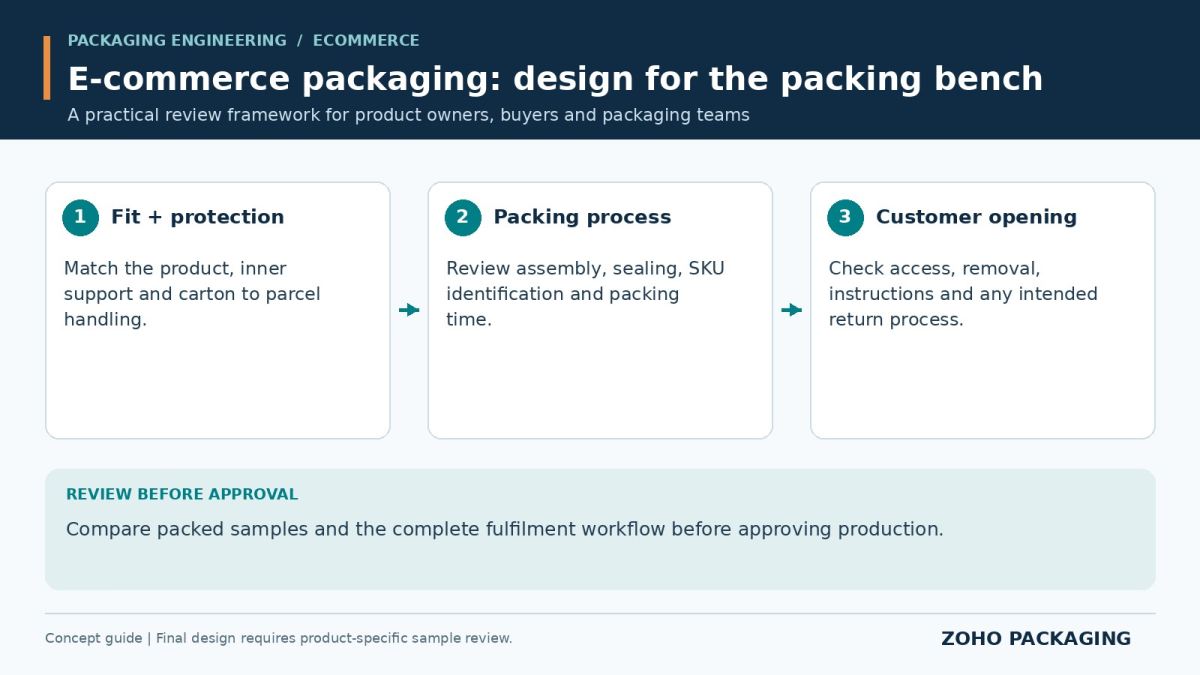 Compare packed samples and the complete fulfilment workflow before approving production.
In e-commerce,
your packaging is not just protection.
It is your first physical interaction with the customer.
And if that experience fails—
so does your brand.
E-commerce Packaging Has Two Jobs
Most businesses focus on only one:
“Protect the product.”
But high-performing brands know:
A great e-commerce box must do both:
1. Survive Shipping
Handle drops, compression, and rough handling.
2. Deliver Brand Experience
Create a clean, premium, and memorable unboxing.
If you only achieve one,
you are leaving money on the table.
Why Most E-commerce Boxes Fail
Common problems we see:
- Oversized boxes → high shipping cost
- Too much filler → messy unboxing
- Weak structure → damaged products
- Generic packaging → no brand impact
- Slow packing process → operational inefficiency
These issues don’t just affect cost.
They affect reviews, returns, and repeat purchases.
Built for Real E-commerce Logistics
E-commerce boxes go through:
- Parcel sorting systems
- Multiple drops
- High-speed handling
- Last-mile delivery pressure
Your packaging must survive all of it.
We design e-commerce corrugated boxes that:
- Maintain structure under impact
- Protect contents without overpacking
- Stay visually clean on arrival
- Support fast packing workflows
Because in e-commerce,
consistency = trust.
Right Size = Lower Cost + Better Protection
One of the biggest hidden costs in e-commerce is box size.
If your box is too large:
- You pay more in dimensional weight
- Products move inside → damage risk increases
- You need more filler
- Packing becomes slower
We optimize box dimensions to:
- Reduce shipping cost
- Improve product stability
- Minimize filler usage
- Increase packing efficiency
Small changes in size
create big changes in profit.
Mailer Boxes vs Shipping Cartons
Mailer Boxes (Die-cut)
- Clean presentation
- Better unboxing experience
- Ideal for DTC brands
- Often no need for tape
Regular Shipping Cartons (RSC)
- More cost-efficient
- Suitable for bulk shipping
- Better for heavier loads
We help you choose based on:
- Brand positioning
- Product type
- Order volume
- Logistics model
Because packaging should match your business model.
Reduce Returns Through Better Packaging
Many returns are not product problems.
They are packaging problems:
- Product scratched during shipping
- Box crushed
- Items shifting inside
A well-designed e-commerce box:
- Locks product in place
- Reduces impact damage
- Maintains product condition
Less damage = fewer returns = higher margin.
Scalable for Growing Brands
As your order volume grows,
packaging problems scale with it.
We design for:
- High-volume fulfillment
- Consistent box quality
- Fast packing workflows
- Easy storage and handling
Because what works at 100 orders/day
must still work at 1,000+.
Custom E-commerce Packaging Options
We provide:
- Custom mailer boxes
- Printed corrugated boxes
- Subscription box packaging
- Protective inserts
- Multi-product packaging solutions
- Lightweight optimized shipping cartons
Every design is based on:
your product + your logistics + your brand
Before vs After (E-commerce Optimization)
Before:
- Generic oversized boxes
- High filler usage
- Frequent minor damage
- Inconsistent brand experience
After:
- Right-sized packaging
- Reduced shipping cost
- Stable product protection
- Clean, branded unboxing
This is not packaging upgrade.
This is conversion optimization.
Who Needs Better E-commerce Boxes?
If you:
- Sell on Shopify / Amazon / DTC
- Have increasing order volume
- Want better unboxing experience
- Are dealing with damage or returns
- Need faster packing operations
Then your packaging is part of your growth strategy.
Why Work With Us
We combine:
- Packaging engineering
- Logistics optimization
- Brand-focused design
- Scalable manufacturing
We do not just make boxes.
We help e-commerce brands ship smarter.
Call to Action
If your current packaging:
- Costs too much to ship
- Looks generic
- Causes damage or returns
Then it is time to upgrade.
Tell us:
- Product size and weight
- Order volume
- Shipping method
We will help you design e-commerce corrugated boxes that:
protect better, cost less, and sell more.
FAQ
1. What are e-commerce corrugated boxes?
E-commerce corrugated boxes are packaging solutions specifically designed for online retail shipping. They must handle parcel delivery conditions such as drops, sorting systems, and multiple handling points. In addition to protection, they also play a role in branding and customer experience. Unlike generic boxes, e-commerce packaging is optimized for both logistics performance and presentation.
2. Why is box size important in e-commerce shipping?
Box size directly affects shipping cost, especially when dimensional weight pricing is used. Oversized boxes increase shipping fees, require more filler, and allow products to move during transit. A properly sized box reduces cost, improves protection, and speeds up packing operations. Right-sizing is one of the most effective ways to optimize e-commerce logistics.
3. What is the difference between a mailer box and a shipping carton?
Mailer boxes are typically die-cut and designed for direct-to-consumer shipping with a better unboxing experience. They often do not require tape and provide a cleaner look. Shipping cartons (RSC) are more cost-efficient and suitable for bulk or heavier shipments. The choice depends on product type, branding needs, and order volume.
4. How can packaging reduce return rates?
Proper packaging reduces product movement, absorbs impact, and maintains product condition during shipping. Many returns are caused by damage rather than product defects. By improving packaging structure and fit, businesses can significantly reduce return rates and improve customer satisfaction.
5. Can custom e-commerce packaging improve branding?
Yes. Custom packaging enhances brand recognition and creates a memorable unboxing experience. Printed boxes, clean structure, and thoughtful design can increase perceived value and encourage repeat purchases. Packaging is often the first physical touchpoint between your brand and the customer.
6. Is custom packaging more expensive?
While the unit cost may be higher, the overall cost is often lower when considering reduced damage, fewer returns, and lower shipping expenses. Custom packaging should be evaluated based on total business impact, not just per-unit price.
7. Do I need inserts inside e-commerce boxes?
Inserts are useful for stabilizing products and preventing movement. They are especially important for fragile or multi-item shipments. Proper inserts can reduce damage and improve presentation, making them a valuable addition to many e-commerce packaging systems.
8. What materials are used in e-commerce corrugated boxes?
Most e-commerce boxes use single wall or double wall corrugated board, depending on product weight and shipping conditions. The choice of material should match the required strength and cost considerations. Proper structure design is just as important as material selection.
9. How do I scale packaging for growing orders?
Scalable packaging requires consistent box quality, efficient packing processes, and reliable supply. Standardizing box sizes and optimizing structure can improve efficiency as order volume increases. Working with a manufacturer that supports growth is critical.
10. How do I start designing custom e-commerce packaging?
Begin by defining your product dimensions, weight, order volume, and branding needs. A packaging partner can then recommend the appropriate box type, size, and structure. Prototyping and testing may also be used to refine the design before full production.