Corrugated Box Cost Optimization
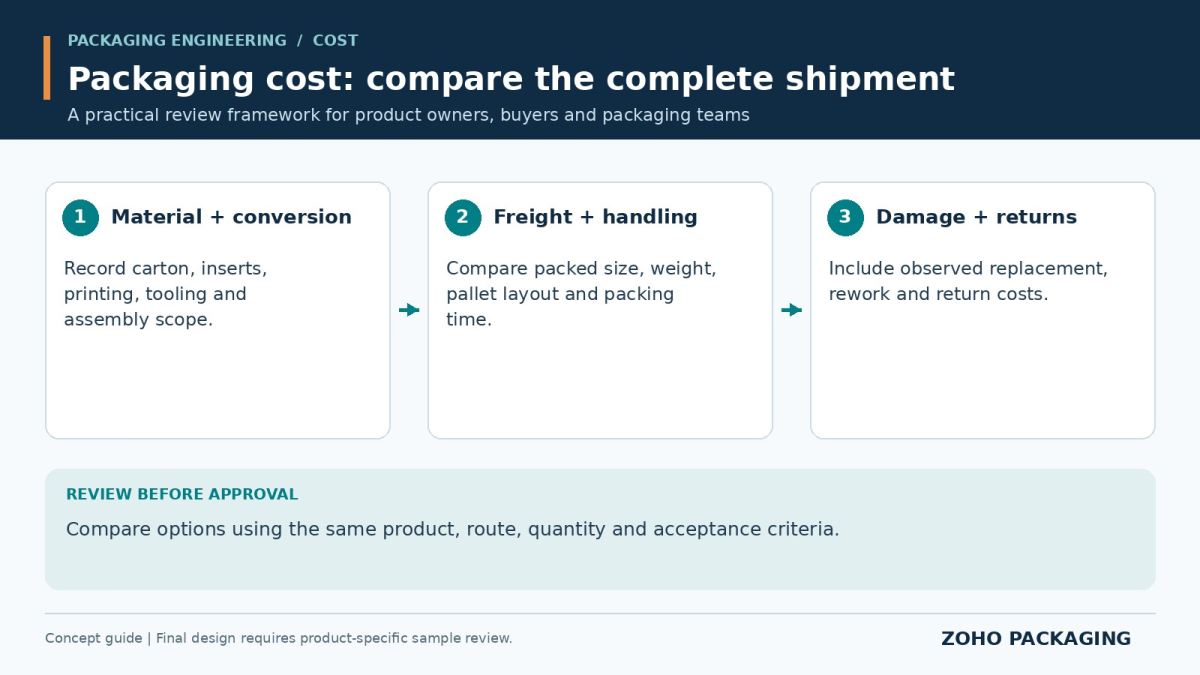 Compare options using the same product, route, quantity and acceptance criteria.
Most companies try to reduce packaging cost the wrong way.
They ask:
“How can I make the box cheaper?”
The real question should be:
“How can I reduce total cost without increasing risk?”
Because packaging is not just a cost.
It is a profit control system.
The Biggest Mistake: Focusing on Unit Price
Most buyers compare:
- Box A: cheaper
- Box B: more expensive
And choose A.
But they ignore:
- Damage cost
- Return cost
- Repacking labor
- Shipping inefficiency
- Customer dissatisfaction
A cheaper box can easily become
the most expensive decision.
What “Real Cost” Actually Includes
Your packaging cost is not just the box.
It includes:
1. Product Damage Cost
Broken or damaged goods during shipping.
2. Return & Replacement Cost
Reverse logistics and re-shipping.
3. Shipping Cost
Dimensional weight and wasted space.
4. Labor Cost
Packing time and operational inefficiency.
5. Brand Cost
Customer experience and reputation.
If you only optimize one,
you lose on the others.
How to Actually Reduce Packaging Cost
Real cost optimization comes from:
1. Right-Sizing the Box
Reduce empty space → lower shipping cost → less filler.
2. Structural Optimization
Use smarter design instead of thicker material.
3. Material Matching
Use the right strength—not over-spec, not under-spec.
4. Internal Design
Reduce damage without overpacking.
5. Pallet & Logistics Optimization
More units per shipment = lower cost per unit.
Example: Cheap Box vs Smart Box
Cheap Box:
- Lower unit price
- Oversized
- Weak structure
- High damage risk
Smart Box:
- Slightly higher unit price
- Optimized size
- Proper structure
- Lower total cost
The difference is not price.
It is thinking.
Dimensional Weight Is Killing Your Margin
In e-commerce and export shipping,
you are often charged by volume, not weight.
If your box is too large:
- You pay more for shipping
- You use more filler
- Your product moves more
Optimizing box size can reduce shipping cost by:
👉 10%–30% (or more)
Without touching your product.
Over-Engineering vs Under-Engineering
Two common mistakes:
Over-Engineering
- Using double wall when not needed
- Adding excessive protection
- Increasing cost unnecessarily
Under-Engineering
- Using weak boxes
- High damage rate
- Hidden losses
The goal is not stronger or cheaper.
The goal is:
Right level of performance.
Packaging as a System (Not a Product)
Cost optimization only works when you look at:
- Box design
- Product fit
- Internal protection
- Packing workflow
- Shipping method
All together.
If you optimize only one part,
you break the system.
Real Impact: Before vs After
Before:
- Generic box sizes
- High filler usage
- High shipping cost
- Occasional damage
After:
- Optimized box dimensions
- Reduced filler
- Lower shipping cost
- Stable delivery performance
This is not cost cutting.
This is cost control.
Who Needs Cost Optimization?
If you:
- Ship high volume
- Sell e-commerce products
- Export goods
- Have rising shipping costs
- Experience damage or returns
Then your packaging is affecting your margin.
Why Work With Us
We optimize packaging based on:
- Real shipping conditions
- Product behavior
- Logistics efficiency
- Structural engineering
We do not just reduce box cost.
We reduce total operational cost.
Call to Action
If your packaging:
- Feels “cheap” but causes problems
- Looks fine but costs too much to ship
- Has never been optimized
Then you are leaving money on the table.
Tell us:
- Product size
- Weight
- Shipping method
We will help you design packaging that:
costs less overall, not just per unit.
FAQ
1. What is corrugated box cost optimization?
Corrugated box cost optimization is the process of reducing total packaging-related expenses, not just the price of the box itself. It includes optimizing box size, structure, material, and logistics efficiency. The goal is to lower overall cost while maintaining or improving performance, rather than simply choosing the cheapest option.
2. Why is the cheapest box not always the best option?
The cheapest box often leads to higher hidden costs such as product damage, returns, and inefficient shipping. These costs can quickly exceed the savings from a lower unit price. A slightly more expensive but better-designed box can reduce total cost significantly by improving performance and reliability.
3. How does box size affect shipping cost?
Shipping carriers often charge based on dimensional weight, which considers the volume of the package. Oversized boxes increase shipping cost even if the product is light. Properly sized boxes reduce volume, lower shipping fees, and improve efficiency.
4. Can better packaging really reduce damage costs?
Yes. Properly designed packaging stabilizes the product, absorbs impact, and maintains structural integrity during shipping. This reduces damage rates and lowers the cost of returns, replacements, and customer dissatisfaction.
5. What is the role of structural design in cost optimization?
Structural design determines how well the box performs under real conditions. A well-designed structure can use less material while maintaining strength, reducing both material cost and damage risk. It is one of the most effective ways to optimize packaging.
6. How can I reduce filler material usage?
By optimizing box size and internal structure, you can reduce or eliminate the need for excessive filler. Inserts and proper fit design can stabilize the product more effectively than loose filler materials.
7. Is custom packaging always more expensive?
Not necessarily. While the unit cost may be higher, custom packaging often reduces total cost through better fit, lower shipping expenses, and reduced damage. It should be evaluated based on overall impact, not just per-unit price.
8. How does pallet optimization reduce cost?
Better pallet design allows more products to be shipped in the same space, reducing transportation cost per unit. It also improves stability, reducing damage during shipping.
9. What industries benefit most from packaging cost optimization?
Industries with high shipping volume, such as e-commerce, manufacturing, and export businesses, benefit the most. In these industries, small improvements in packaging efficiency can lead to significant cost savings.
10. How do I start optimizing my packaging cost?
Start by analyzing your current packaging performance, including shipping cost, damage rate, and packing efficiency. Then work with a packaging expert to identify improvements in size, structure, and logistics. Even small changes can lead to significant savings.