Sea Freight Packaging Solutions That Survive Long Distance Shipping
Shipping by sea is efficient, but it is also one of the most demanding environments for packaging. Long transit time, high humidity, stacking pressure, and repeated handling all increase the risk of product damage.
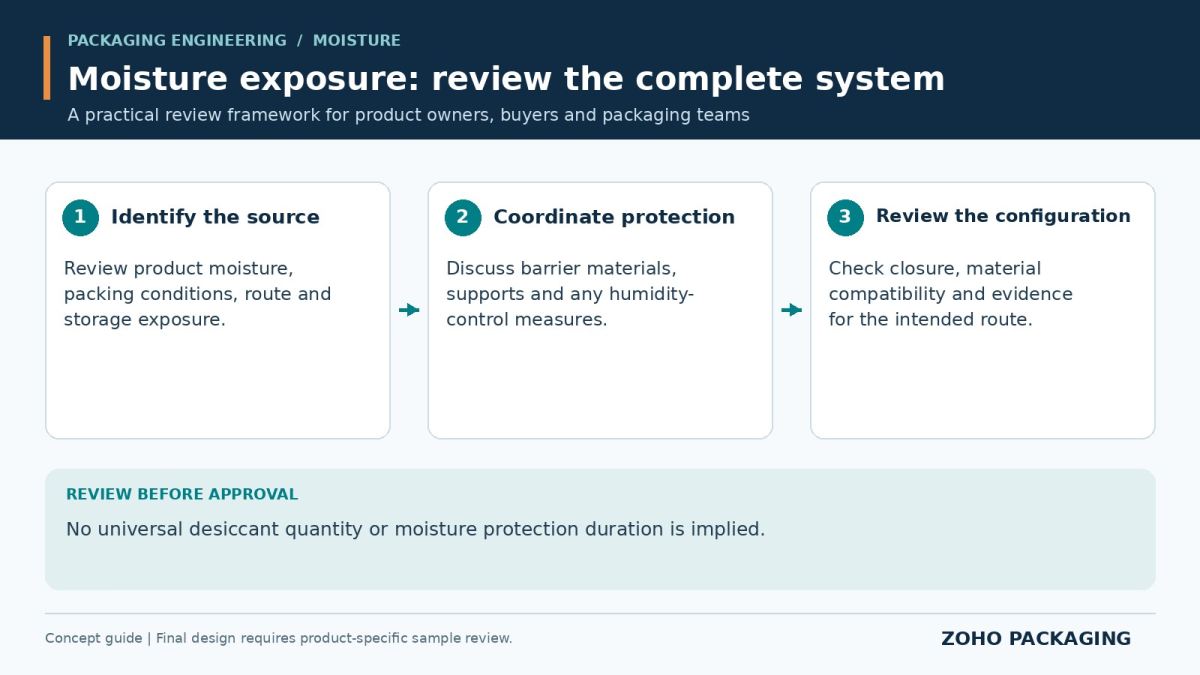 No universal desiccant quantity or moisture protection duration is implied.
Sea freight packaging solutions are not just about putting products into boxes. They are about designing packaging that can survive weeks of compression, vibration, and environmental changes inside containers.
At Zoho Packaging, we focus on building packaging systems that protect cargo throughout the entire ocean shipping process — from factory loading to final delivery.
Why Sea Freight Packaging Requires Different Design Thinking
Unlike air or local delivery, sea freight exposes products to continuous stress over a long period of time.
A typical shipping journey includes:
- warehouse stacking before loading
- container loading and tight compression
- ocean transit with humidity fluctuation
- port unloading and handling
- inland transportation after arrival
During this process, packaging must maintain structural integrity for weeks, not hours.
The most common risks in sea freight include:
- carton collapse from stacking pressure
- moisture absorption weakening corrugated board
- internal movement causing product damage
- pallet instability during loading and unloading
- container shifting during ocean transit
This is why standard packaging often fails in export scenarios.
Core Elements of Sea Freight Packaging Solutions
Effective sea freight packaging design is based on engineering logic, not guesswork.
1. Compression Strength (Stacking Performance)
In container shipping, cartons are stacked for long periods. If the box cannot withstand pressure, it will deform or collapse.
We design packaging based on stacking conditions, storage duration, and real load scenarios — not just theoretical values.
2. Moisture Resistance & Humidity Control
Ocean containers experience high humidity levels. Corrugated material can lose strength when exposed to moisture.
Solutions may include:
- moisture-resistant board selection
- reinforced structure design
- protective liners or coatings
- optimized ventilation and packing method
Ignoring humidity is one of the biggest causes of export packaging failure.
3. Internal Protection & Load Stability
Inside the carton, products must remain stable.
We design internal structures such as:
- partitions and dividers
- corner supports
- paper-based cushioning systems
- custom inserts for high-value products
The goal is simple: no movement, no damage.
4. Pallet Optimization & Container Efficiency
Good packaging is not just strong — it must also be efficient.
We optimize:
- carton size for pallet layout
- pallet stacking patterns
- container loading efficiency
Better packaging design can significantly reduce shipping cost per unit.
5. Handling & Operational Practicality
Packaging must work in real logistics environments.
This includes:
- easy stacking and alignment
- stable palletization
- compatibility with strapping and wrapping
- clear labeling and identification
A design that works only on paper is not a real solution.
Common Sea Freight Packaging Failures
Most export packaging issues are predictable — and preventable.
Typical problems include:
- cartons collapsing after long stacking
- weakened board due to humidity
- product damage from internal movement
- inefficient carton sizes increasing freight cost
- unstable pallet loading causing shifting
These failures often come from using domestic packaging logic in export scenarios.
Sea Freight Packaging for Different Products
Different cargo requires different packaging strategies.
Heavy industrial products
→ reinforced corrugated or hybrid structures with load distribution
Automotive parts
→ anti-shock, anti-scratch, fixed positioning design
Electronics
→ precision fit, vibration protection, controlled internal spacing
Retail products (export cartons)
→ balance between shipping strength and presentation
High-value equipment
→ packaging designed to minimize claim risk and ensure delivery integrity
Reduce Shipping Loss, Not Just Packaging Cost
Many companies try to reduce packaging cost per unit.
But the real cost lies in:
- damaged goods
- reshipping expenses
- delayed delivery
- customer dissatisfaction
- brand reputation loss
A slightly stronger packaging design can save thousands in potential losses.
Sea freight packaging is not about cheaper boxes — it is about safer delivery.
Our Sea Freight Packaging Approach
We design packaging based on:
- product weight and structure
- shipping method and duration
- pallet and container requirements
- handling conditions
- production consistency
Our solutions include:
- heavy duty corrugated export cartons
- custom internal protection systems
- pallet-optimized packaging design
- packaging upgrades for damage reduction
- packaging systems for industrial and commercial export
Built for Real Shipping Conditions
Ocean shipping is unpredictable. Your packaging should not be.
At Zoho Packaging, we focus on real-world performance — not just specifications.
Because when your shipment travels thousands of miles, packaging is not just a box.
It is your last line of protection.
FAQ(每題約150字)
1. What are sea freight packaging solutions?
Sea freight packaging solutions refer to packaging systems specifically designed for ocean shipping conditions. These solutions consider long transit times, high humidity, stacking pressure, and repeated handling. Unlike standard packaging, sea freight packaging must maintain strength and stability for weeks. It includes structural carton design, internal protection, pallet optimization, and moisture control. The goal is to ensure products arrive safely without damage, even after long-distance international transport.
2. Why is moisture a major issue in sea freight packaging?
During ocean transport, containers experience temperature differences that create condensation. This moisture can weaken corrugated material and reduce its compression strength. Over time, cartons may soften and collapse under stacking pressure. That is why sea freight packaging must consider humidity resistance, material selection, and structural reinforcement. Without proper design, even a strong carton can fail in a high-humidity environment.
3. How does stacking pressure affect packaging?
In sea freight, cartons are often stacked for long durations inside containers or warehouses. Continuous pressure can cause deformation or collapse if the packaging is not designed correctly. The risk increases with heavier products and higher stacking levels. Proper sea freight packaging design ensures that the box can maintain its shape and protect the product even under prolonged compression.
4. Can better packaging reduce shipping costs?
Yes. Efficient packaging design can optimize carton size, improve pallet arrangement, and increase container utilization. This reduces wasted space and lowers shipping cost per unit. Additionally, better packaging reduces product damage, which avoids replacement shipments and hidden costs. In many cases, investing in proper packaging leads to overall cost savings.
5. What is the biggest mistake in export packaging?
The biggest mistake is using domestic packaging standards for international shipping. Domestic logistics usually involve shorter distances and less handling. Export shipments face more stress, longer duration, and harsher conditions. Without upgrading the packaging design, the risk of failure increases significantly.
6. What types of products need sea freight packaging solutions?
Heavy items, fragile goods, precision equipment, automotive parts, and high-value products all require specialized sea freight packaging. These products are more sensitive to impact, movement, and environmental conditions, making proper packaging design essential for safe delivery.
7. How can internal packaging reduce damage?
Internal packaging prevents movement inside the carton. By using inserts, dividers, or cushioning materials, products are held in place and protected from impact. This reduces the risk of scratches, breakage, and structural damage during transport.
8. Why is pallet design important in sea freight?
Pallet design affects load stability, handling efficiency, and container utilization. Poor pallet arrangement can lead to shifting during transport, increasing the risk of damage. Optimized pallet layouts improve safety and reduce logistics cost.
9. Is stronger packaging always better for sea freight?
Not necessarily. The goal is to design packaging that is strong enough for the shipping conditions while remaining cost-efficient. Over-packaging increases material cost and shipping weight. The key is balanced engineering design.
10. How do you choose the right sea freight packaging solution?
You need to consider product weight, fragility, shipping duration, stacking conditions, humidity exposure, and logistics requirements. A professional packaging supplier will evaluate these factors and design a customized solution that balances protection and cost.