Moisture-Resistant Export Packaging That Prevents Hidden Shipping Damage
In export shipping, moisture is one of the most underestimated risks.
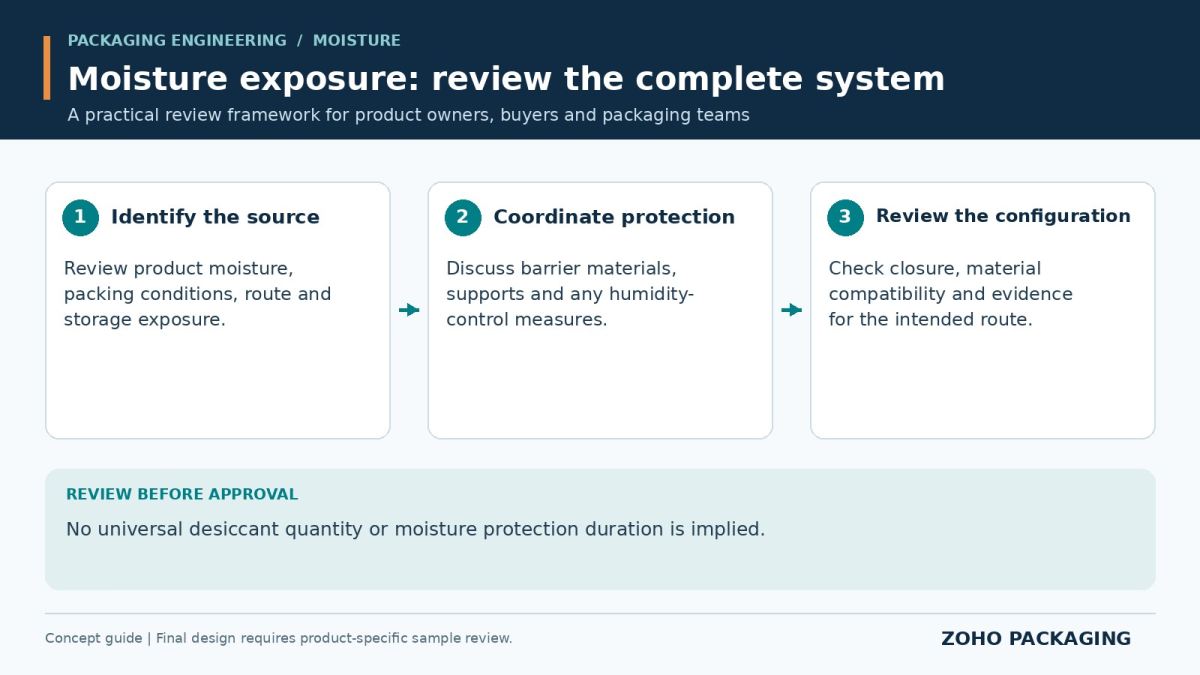 No universal desiccant quantity or moisture protection duration is implied.
Many companies only realize the problem when cartons arrive:
- softened
- deformed
- collapsed
- or with damaged products inside
Moisture-resistant export packaging is not optional in sea freight.
It is essential.
At Zoho Packaging, we design packaging systems that maintain strength even in high humidity environments — protecting both products and profit.
Why Moisture Is a Serious Problem in Export Packaging
During sea freight, containers experience:
- temperature fluctuations
- condensation ("container rain")
- high humidity levels
- long exposure periods
Corrugated packaging absorbs moisture.
When it does:
- compression strength drops
- structure weakens
- stacking performance fails
👉 A box that is strong in dry conditions can fail completely in humid conditions.
What Happens When Packaging Fails Due to Moisture
Moisture damage leads to:
- carton collapse under stacking
- product deformation or breakage
- increased return and replacement cost
- customer complaints
- brand damage
The biggest problem?
👉 You don’t see it coming until it is too late.
Core Solutions for Moisture-Resistant Packaging
1. Moisture-Resistant Material Selection
Not all corrugated boards perform the same in humidity.
We select:
- higher quality liners
- moisture-resistant treated paper
- stronger flute combinations
This slows down moisture absorption and maintains strength.
2. Structural Reinforcement for Humidity Conditions
Even with moisture, structure must hold.
We design:
- reinforced load paths
- stronger corner structures
- optimized stacking strength
So the box still performs under reduced material strength.
3. Protective Layering & Barrier Solutions
For high-risk shipments, we apply:
- inner liners
- moisture barriers
- protective wraps
This reduces direct exposure to humidity.
4. Internal Protection Against Indirect Damage
Moisture can also affect the product indirectly.
We design:
- internal supports
- cushioning systems
- anti-contact structures
Even if the outer carton is affected, the product remains protected.
5. Packaging + Container Strategy
Moisture control is not only about the box.
We also consider:
- container loading conditions
- airflow and packing density
- desiccant usage (if required)
Common Moisture-Related Packaging Failures
- cartons collapsing during sea transit
- weakened stacking strength after humidity exposure
- product damage due to structural failure
- poor material selection for export conditions
- ignoring environmental factors during design
Industries That Need Moisture-Resistant Packaging
Electronics
→ sensitive to humidity + high value
Food products
→ packaging integrity + hygiene
Industrial parts
→ corrosion risk + heavy load
Paper-based products
→ highly sensitive to moisture
Retail export goods
→ presentation + protection
Moisture + Compression = Real Risk
The biggest danger is not moisture alone.
It is moisture combined with stacking pressure.
When humidity weakens the box:
- compression strength drops
- stacking fails
- collapse happens
👉 This is why moisture-resistant export packaging must be designed with both environment and load in mind.
Reduce Loss, Not Just Packaging Cost
Many companies underestimate moisture risk.
But the real cost includes:
- damaged goods
- reshipping
- delays
- lost customers
A properly designed moisture-resistant packaging system can:
- maintain structural integrity
- reduce damage rates
- improve export reliability
- protect brand reputation
Our Moisture-Resistant Packaging Approach
We design based on:
- shipping method (especially sea freight)
- humidity exposure level
- product sensitivity
- stacking requirements
- transport duration
Our solutions include:
- moisture-resistant corrugated packaging
- reinforced export cartons
- humidity-optimized structural design
- packaging upgrades for damage prevention
- integrated export packaging systems
Built for Real Ocean Conditions
Moisture is invisible — but its impact is not.
At Zoho Packaging, we design packaging that performs in real-world environments, not just dry test conditions.
Because in export shipping:
👉 The box does not fail in the factory.
It fails in the container.
FAQ
1. What is moisture-resistant export packaging?
Moisture-resistant export packaging is designed to protect products and maintain structural strength in high humidity environments, especially during sea freight. It uses specific materials, structural design, and protective layers to reduce moisture absorption and prevent packaging failure.
2. Why is humidity a problem for corrugated packaging?
Corrugated material absorbs moisture, which weakens its strength. As humidity increases, compression strength decreases, making cartons more likely to collapse under stacking pressure.
3. What is container condensation?
Container condensation, also known as "container rain," occurs when temperature differences cause moisture to form inside the container. This moisture can drip onto packaging and products, causing damage.
4. Can moisture-resistant packaging prevent carton collapse?
Yes. Proper design, material selection, and structural reinforcement help maintain strength even in humid conditions, reducing the risk of collapse.
5. What products need moisture-resistant packaging?
Electronics, food products, industrial parts, paper goods, and high-value export items all benefit from moisture-resistant packaging.
6. Is standard packaging enough for sea freight?
In most cases, no. Standard packaging is not designed for long exposure to humidity and may fail during ocean shipping.
7. How can internal packaging help with moisture issues?
Internal packaging protects products even if the outer carton is affected by moisture. It reduces movement and prevents direct damage.
8. Can desiccants replace moisture-resistant packaging?
No. Desiccants help control humidity but cannot replace proper packaging design. Both should be used together if needed.
9. What is the biggest mistake in moisture-related packaging?
Ignoring humidity during design. Many companies test packaging in dry conditions but fail to consider real shipping environments.
10. How do you choose the right moisture-resistant packaging?
You need to consider shipping method, duration, humidity exposure, product type, and stacking conditions. A customized design ensures the best protection.