Not Every Shipment Needs a Full Wooden Crate
Most exporters default to:
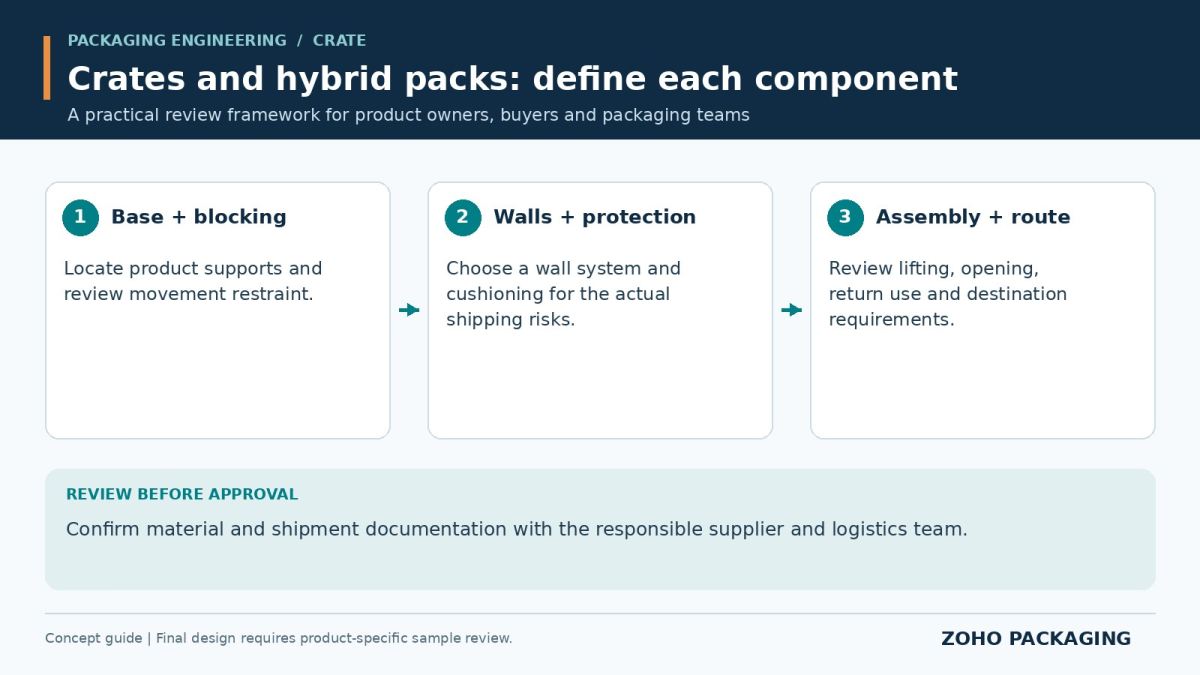 Confirm material and shipment documentation with the responsible supplier and logistics team.
- “Use a wooden crate for safety”
That’s expensive — and often unnecessary.
👉 The real solution is choosing the right structure, not the heaviest one
What Is Hybrid Packaging?
Hybrid packaging combines:
👉 Wood structure (for strength)
👉 Corrugated materials (for flexibility & cost control)
Typical configurations:
- Wooden base + corrugated walls
- Wooden frame + heavy-duty carton panels
- Reinforced pallet + hybrid enclosure
👉 You get strength where it matters — and cost savings where it doesn’t
1. When You Need a Wooden Crate
Full wooden crates are ideal when:
- Extremely heavy machinery
- High stacking pressure
- Long-distance ocean freight
- High-value equipment
Advantages:
- Maximum structural strength
- High load capacity
- Strong impact resistance
Limitations:
- Higher cost
- Heavier weight → higher freight cost
- Requires ISPM 15 compliance (heat treatment / fumigation)
2. When Hybrid Packaging Is Better
Hybrid solutions are ideal when:
- Medium to heavy products
- Need structural support but not full wood
- Cost optimization is critical
- Air freight weight matters
Benefits:
- Reduced material cost
- Lower shipping weight
- Flexible design
- Easier handling
👉 Same protection logic — smarter material allocation
3. Load Path Engineering
The key is not mixing materials randomly.
It’s designing:
👉 A controlled load path across different materials
Structure logic:
- Wood base → carries primary load
- Reinforced edges → transfer vertical force
- Corrugated panels → enclosure + secondary support
👉 Wood handles load, paper handles structure
4. Shock & Vibration Control
Wood alone does NOT solve impact problems.
Required additions:
- Internal cushioning systems
- Shock-absorbing materials
- Fixation structures
👉 Hybrid advantage:
You can integrate cushioning more effectively than rigid wood-only systems
5. Compliance & Export Requirements
For international shipping:
Wooden components must meet:
- ISPM 15 regulations
- Heat treatment (HT mark)
- Pest control compliance
Documentation alignment:
- Packing list
- Shipping declaration
- UN packaging (if applicable)
👉 Missing compliance = shipment delay or rejection
6. Cost Optimization Strategy
Most companies either:
- Overuse wood → cost too high
- Under-design → damage risk
Hybrid solution:
- Use wood only where load is concentrated
- Use corrugated where flexibility is enough
👉 Result:
- Lower cost
- Same or better protection
- Better logistics efficiency
7. Real Case
Before:
- Full wooden crate
- High cost + heavy weight
After:
- Wooden base + AAA corrugated structure
- Same load capacity
- Reduced cost + easier handling
👉 Optimized packaging = competitive advantage
Why Most Suppliers Don’t Offer Hybrid Solutions
Because it requires:
- Engineering capability
- Structural understanding
- Multi-material integration
Most suppliers only sell:
We design:
👉 Integrated packaging systems
What We Provide (ZOHO Packaging)
- Wooden crate design (export compliant)
- Hybrid packaging systems (wood + corrugated)
- Load path engineering
- Shockproof & fixation solutions
- ISPM 15 compliant wooden packaging
- Export-ready industrial packaging
Positioning:
👉 We don’t choose materials — we design performance
If you are:
- Overpaying for wooden crates
- Experiencing damage with cartons
- Shipping heavy equipment internationally
👉 Talk to us.
ZOHO Packaging — Engineered Export Packaging That Balances Cost and Strength
FAQ
Q1: What is hybrid packaging and why is it used?
Hybrid packaging combines different materials—typically wood and corrugated board—to optimize both strength and cost. Instead of using a full wooden crate, which can be heavy and expensive, hybrid designs use wood only in load-bearing areas and corrugated materials for enclosure and secondary support. This approach provides sufficient strength while reducing material usage and shipping weight. It is especially useful for medium to heavy products that require structural integrity but not the full strength of a wooden crate.
Q2: Is hybrid packaging as strong as a wooden crate?
In many cases, yes—if properly engineered. Strength does not come from material alone but from how forces are distributed. By designing a proper load path and reinforcing key areas, hybrid packaging can achieve comparable performance to full wooden crates. However, for extremely heavy or high-risk shipments, full wooden crates may still be necessary. The choice depends on weight, fragility, and transport conditions.
Q3: What is ISPM 15 and why does it matter?
ISPM 15 is an international standard that regulates wood packaging materials used in international trade. It requires wood to be heat-treated or fumigated to prevent the spread of pests. Wooden crates must carry an official ISPM 15 mark to be accepted in most countries. Failure to comply can result in shipment rejection or quarantine. Hybrid packaging that includes wood must also meet these requirements.
Q4: Can hybrid packaging reduce shipping costs?
Yes. Hybrid packaging reduces both material cost and shipping weight. Since freight charges are often based on weight or volume, using less wood can significantly lower transportation costs. Additionally, optimized designs can improve container utilization, further reducing overall logistics expenses.
Q5: When should I choose a full wooden crate instead of hybrid?
Full wooden crates are recommended for extremely heavy machinery, high-value equipment, or shipments exposed to severe handling conditions. They provide maximum structural strength and durability. If the risk of damage is very high, the additional cost of a wooden crate may be justified.
Q6: Does hybrid packaging require special design?
Yes. Hybrid packaging is not simply combining materials—it requires engineering design to ensure proper load distribution and structural integrity. Without proper design, mixing materials can create weak points and lead to failure. Professional engineering is essential.
Q7: How do you protect equipment inside hybrid packaging?
Internal protection systems are used, including cushioning materials, bracing structures, and fixation mechanisms. These prevent movement and absorb shock during transport. The goal is to keep the equipment stable and protected under all conditions.
Q8: Is hybrid packaging suitable for air freight?
Yes, and it is often preferred. Because hybrid packaging is lighter than full wooden crates, it can significantly reduce air freight costs while still providing adequate protection. This makes it ideal for time-sensitive shipments.
Q9: What are the biggest mistakes when using wooden crates?
Common mistakes include over-specifying (using more wood than necessary), ignoring internal fixation, and failing to comply with ISPM 15 regulations. These issues increase cost and risk without improving performance.
Q10: Why work with an engineering-based packaging provider?
Because export packaging is a technical challenge, not just a purchasing decision. An engineering-based provider analyzes your product, logistics, and risks to design an optimized solution. This reduces damage, improves efficiency, and ensures compliance with international standards.