Electronics Packaging Is Not About Boxes — It’s About Preventing Loss
When exporting electronics, packaging is not just a container.
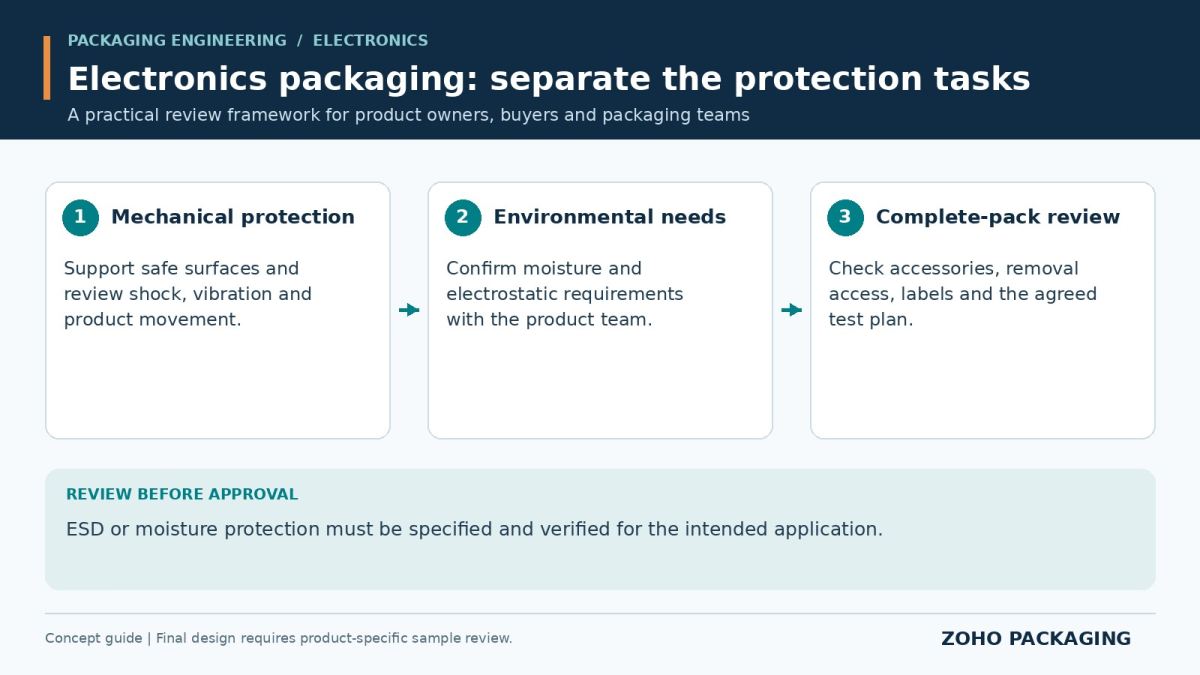 ESD or moisture protection must be specified and verified for the intended application.
It is the first line of defense against vibration, humidity, compression, and impact.
Most companies don’t lose money because of product defects.
They lose money because packaging fails during transportation.
👉 Broken screens
👉 Damaged connectors
👉 Internal component failure
👉 Customer returns & reputation loss
At Zoho Packaging, we don’t sell boxes. We engineer protection.
Common Problems in Electronics Export Packaging
Many exporters face the same issues:
- Products arrive damaged after sea shipping
- Packaging collapses under stacking pressure
- No protection against vibration during long transit
- Moisture damage inside containers
- Static electricity damaging sensitive components
👉 These are not random problems.
👉 These are engineering failures in packaging design.
Our Engineering Approach to Electronics Packaging
We design packaging based on real shipping conditions, not assumptions.
1. Shock & Vibration Protection
- Multi-layer cushioning (EPE / molded pulp / honeycomb paper)
- Drop-test simulation (ISTA standard)
- Designed for long-distance transport
2. Compression Strength (BCT-Based Design)
- Stack-safe carton structure
- Pallet stacking calculation
- Container load optimization
👉 We don’t guess strength. We calculate it.
3. Anti-Static Protection (ESD Safe)
- Anti-static bags & liners
- Conductive cushioning materials
- Designed for sensitive electronics & PCB
4. Moisture & Humidity Control
- Desiccant integration
- Barrier packaging options
- Designed for sea freight environments
Before vs After: Packaging Upgrade Impact
Before (Typical Packaging):
- Standard carton
- No cushioning design
- No stacking calculation
👉 Damage rate: 5%–12%
After (Engineered Packaging):
- Structured cushioning system
- BCT-calculated carton
- Pallet optimization
👉 Damage rate: <1%
Types of Electronics We Handle
We design packaging for:
- Consumer electronics
- Industrial electronics
- Server & IT equipment
- Precision instruments
- Semiconductor equipment
- Automotive electronic components
Why Choose Zoho Packaging
✔ Engineering-based packaging design
✔ Export-focused solutions (sea & air)
✔ Low MOQ available for testing
✔ Fast sampling & iteration
✔ Real factory production capability
👉 We are not just a supplier.
👉 We are your packaging engineering partner.
Real Cost of Packaging Failure
Many companies focus on reducing packaging cost.
But they ignore the real cost:
- Product damage
- Return logistics
- Customer dissatisfaction
- Brand trust loss
👉 Saving $1 on packaging can cost you $100 in losses.
Work With Us
If you are exporting electronics and facing:
- Damage issues
- Unstable packaging
- High return rates
We can help you redesign your packaging system.
👉 Contact us today for a packaging evaluation.
FAQ (Frequently Asked Questions)
1. What is the best packaging for exporting electronics?
The best packaging combines shock protection, anti-static materials, and compression strength. It must be designed based on shipping conditions such as sea freight, stacking height, and product fragility.
2. How do I prevent electronics from damage during shipping?
You need proper cushioning, strong outer cartons, and correct pallet stacking. Testing methods like drop tests and vibration simulation are also important.
3. Do electronics need anti-static packaging?
Yes. Sensitive electronics like PCBs and semiconductors require anti-static (ESD-safe) packaging to prevent electrical damage.
4. What is BCT in packaging?
BCT (Box Compression Test) measures how much weight a carton can تحمل. It ensures your packaging won’t collapse during stacking.
5. How do I reduce packaging damage rate?
By redesigning packaging structure, using proper cushioning, and calculating stacking load instead of guessing.
6. What is the difference between air and sea shipping packaging?
Sea shipping requires stronger moisture protection and higher compression strength due to longer transit time and stacking.
7. Can I use the same packaging for all products?
No. Each product requires different packaging design based on weight, fragility, and shipping method.
8. What materials are best for electronics packaging?
Common materials include corrugated cartons, EPE foam, molded pulp, anti-static bags, and honeycomb paper.
9. Do you offer small quantity orders?
Yes. We support low MOQ for testing and product launch stages.
10. How can I start working with you?
Simply contact us with your product size, weight, and shipping method. We will recommend a suitable packaging solution.
Packaging doesn’t fail randomly. It fails by design.
Fix the design, and you fix the loss.