Sustainability Is Not About “Green”
👉 It’s About Efficiency
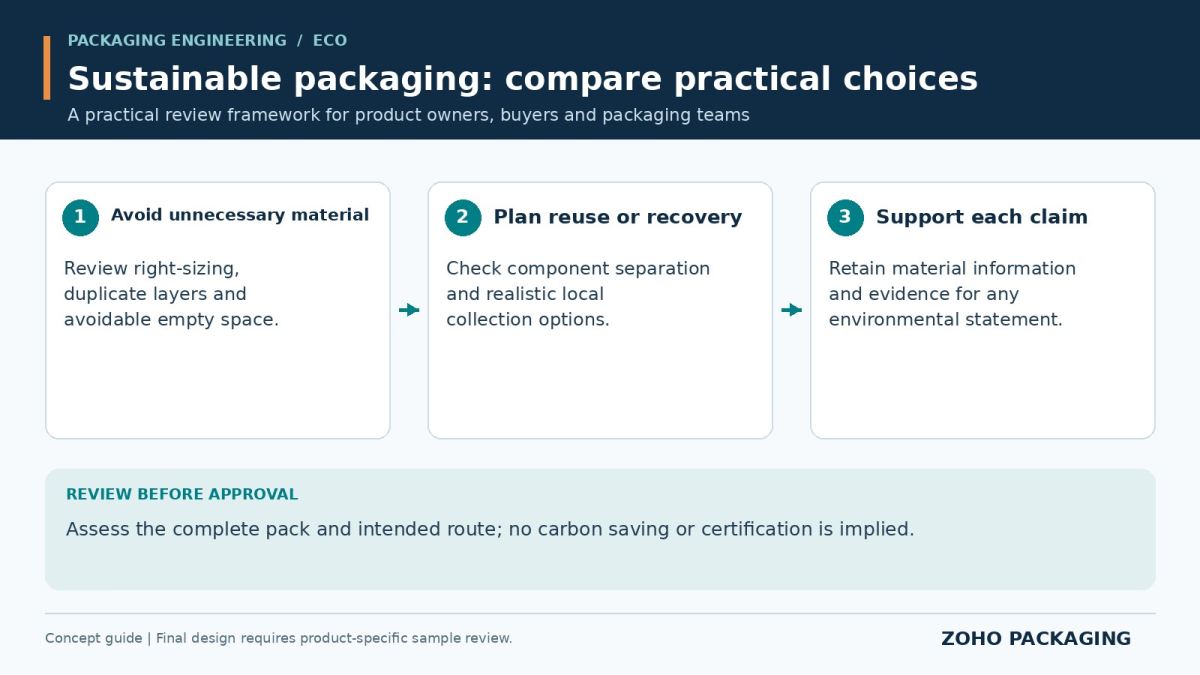 Assess the complete pack and intended route; no carbon saving or certification is implied.
Most companies think sustainable packaging means:
❌ Using eco materials
❌ Replacing plastic
❌ Paying higher cost
👉 That’s incomplete.
Real sustainable packaging = Less waste + Better efficiency + Lower total cost
The Real Problem in Packaging
Most packaging systems are:
- Oversized
- Over-engineered
- Inefficient for logistics
- Not designed for recycling
👉 Result:
- More material waste
- Higher shipping cost
- Higher carbon footprint
What Sustainable Packaging Actually Means
A sustainable packaging system must achieve:
1️⃣ Material Efficiency
Use only what is needed — no excess
2️⃣ Logistics Efficiency
Maximize units per shipment
3️⃣ Structural Performance
Maintain protection without over-design
4️⃣ Recyclability
Simplify material composition
Our Approach to Sustainable Packaging
🔧 1️⃣ Reduce Material Usage (Without Risk)
We redesign packaging to:
- Eliminate unnecessary layers
- Optimize board grade
- Reduce thickness where possible
👉 Result:
- Less material consumption
- Lower cost
📦 2️⃣ Size Optimization (Biggest Impact)
Oversized packaging is the #1 waste source.
We:
- Reduce box dimensions
- Eliminate empty space
- Improve product fit
👉 Result:
- Lower shipping cost
- Reduced carbon emissions
🚛 3️⃣ Logistics Optimization
We design for:
- 48"x40" pallet
- Container efficiency
👉 Result:
- More units per shipment
- Less transportation waste
♻️ 4️⃣ Single-Material Design
We reduce mixed materials:
❌ Plastic + foam + paper
👉 Replace with
✅ Paper-based system
👉 Result:
- Easier recycling
- Better ESG compliance
🛡️ 5️⃣ Maintain Protection Performance
Sustainability without protection = failure
We ensure:
- Shock absorption
- Load distribution
- Stacking strength
👉 No compromise on performance
Before vs After (Typical Outcome)
| Factor |
Before |
After |
| Material Usage |
High |
Reduced |
| Packaging Size |
Oversized |
Optimized |
| Shipping Cost |
High |
Lower |
| Carbon Impact |
High |
Reduced |
Real Impact
👉 20%–40% material reduction
👉 15%–30% shipping cost reduction
👉 Significant waste reduction
👉 Sustainability = Profit + ESG
Who Needs Sustainable Packaging
- Export manufacturers
- E-commerce brands
- Automotive suppliers
- Global brands with ESG goals
Common Mistakes
❌ Switching material without redesign
❌ Using eco material but oversized box
❌ Ignoring logistics efficiency
❌ Treating sustainability as marketing
👉 Result: higher cost, no real benefit
🌱 Want to reduce cost AND improve sustainability?
👉 Get a Free Sustainable Packaging Analysis
📊 FAQ
Q1: What is sustainable packaging in practical terms?
Sustainable packaging in practical terms refers to designing packaging systems that reduce environmental impact while maintaining performance and cost efficiency. This includes minimizing material usage, optimizing packaging size, improving logistics efficiency, and ensuring recyclability. It is not just about using eco-friendly materials, but about improving the entire packaging system. A well-designed sustainable packaging solution reduces waste, lowers shipping costs, and improves operational efficiency.
Q2: Does sustainable packaging increase cost?
Sustainable packaging does not necessarily increase cost. In many cases, it actually reduces total cost by improving efficiency. For example, reducing packaging size lowers shipping cost, and optimizing material usage reduces material cost. While some eco-friendly materials may have higher unit prices, the overall system cost can still decrease. The key is to focus on total cost rather than individual components.
Q3: How can packaging reduce environmental impact?
Packaging can reduce environmental impact by minimizing material usage, improving recyclability, and reducing transportation emissions. Smaller and lighter packaging requires less energy to transport, which lowers carbon emissions. Using recyclable materials and reducing mixed materials also improves waste management. A well-designed packaging system considers the entire lifecycle, from production to disposal.
Q4: Is paper-based packaging always more sustainable?
Paper-based packaging is generally more sustainable than plastic because it is recyclable and derived from renewable resources. However, sustainability also depends on how the packaging is designed and used. An oversized paper box can still be inefficient and wasteful. Therefore, material choice must be combined with efficient design to achieve true sustainability.
Q5: What industries benefit most from sustainable packaging?
Industries with high shipping volumes and global distribution benefit the most from sustainable packaging. This includes e-commerce, automotive parts, electronics, and industrial products. These industries can achieve significant cost savings and environmental benefits by optimizing packaging systems.
Q6: How does packaging size affect sustainability?
Packaging size directly affects sustainability because larger packaging increases material usage and transportation emissions. Reducing packaging size improves efficiency by lowering dimensional weight and increasing units per shipment. This reduces both cost and environmental impact. Size optimization is one of the most effective sustainability strategies.
Q7: What is single-material packaging and why is it important?
Single-material packaging uses only one type of material, such as corrugated paper, instead of combining multiple materials like plastic and foam. This makes recycling easier and more efficient. Mixed materials are difficult to separate and often end up as waste. Single-material design improves recyclability and supports sustainability goals.
Q8: Can sustainable packaging still protect products?
Yes, sustainable packaging can provide strong protection when it is properly designed. By optimizing structure, load distribution, and cushioning, it is possible to achieve high performance with less material. Engineering design ensures that sustainability does not compromise product safety.
Q9: What is the biggest mistake in eco packaging?
The biggest mistake is focusing only on material without considering the entire system. Switching to eco materials without optimizing design can lead to higher cost and lower efficiency. True sustainable packaging requires a holistic approach that includes design, logistics, and material selection.
Q10: How can I start implementing sustainable packaging?
The best way to start is by analyzing your current packaging system and identifying areas for improvement. This includes evaluating material usage, packaging size, and logistics efficiency. Working with a packaging engineering partner can help you develop effective solutions and implement changes that deliver both cost savings and environmental benefits.