The Shift Away from Plastic Is Not Optional
👉 It’s Already Happening
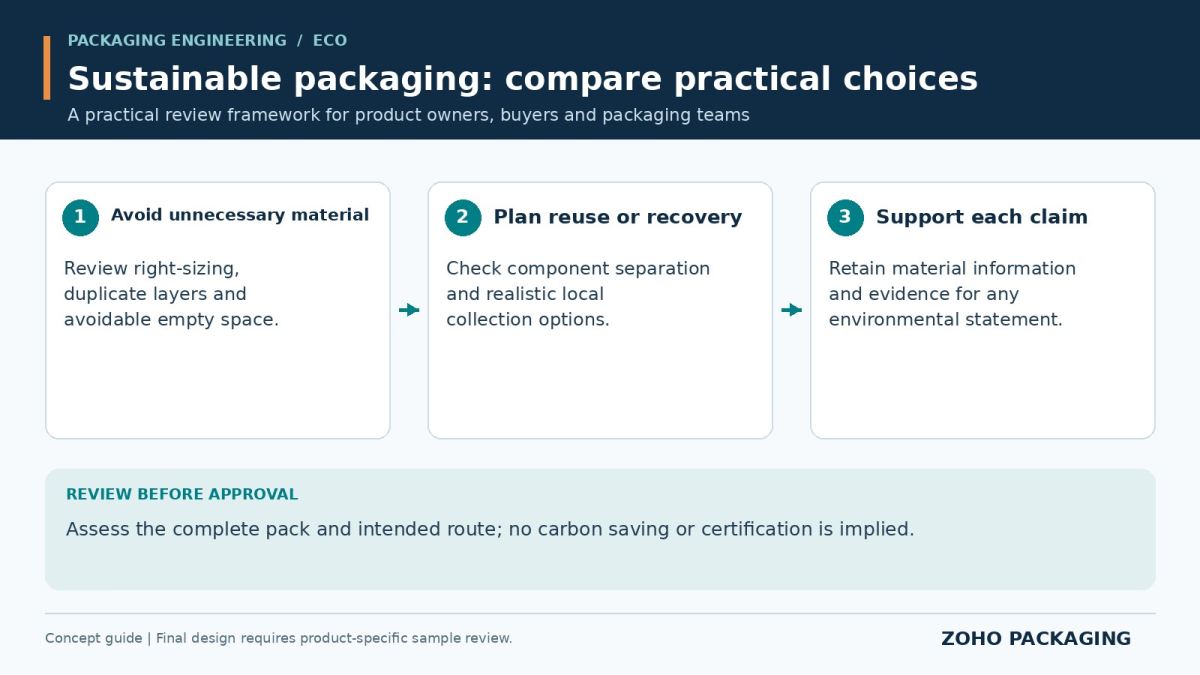 Assess the complete pack and intended route; no carbon saving or certification is implied.
Global brands are moving toward:
- Plastic-free packaging
- ESG compliance
- Sustainable supply chains
👉 If your packaging still relies on plastic
👉 You’re already behind
The Problem with Plastic Packaging
Plastic packaging causes:
- Low recyclability
- Environmental pollution
- Increasing regulatory pressure
- Negative brand perception
👉 Especially in US & EU markets
Plastic-Free Does NOT Mean Weak
Biggest misconception:
❌ Paper = weaker than plastic
👉 Reality:
✅ Engineered paper structures can replace plastic
✅ Corrugated design provides strength + cushioning
Our Plastic-Free Packaging Approach
📦 1️⃣ Replace Foam & Bubble Wrap
We replace:
❌ Foam inserts
❌ Bubble wrap
❌ Plastic fillers
👉 With:
- Corrugated inserts
- Honeycomb paper
- Kraft cushioning
👉 Result:
- Same protection
- Fully recyclable
🔧 2️⃣ Structural Engineering Instead of Plastic
Instead of using plastic protection:
👉 We design:
- Internal support structures
- Load-bearing geometry
- Shock-absorbing paper systems
👉 Result:
- No plastic needed
- Stable product positioning
📉 3️⃣ Reduce Packaging Layers
Plastic packaging often adds layers:
Product → plastic wrap → foam → box
👉 We simplify:
Product → engineered paper system
👉 Result:
- Less material
- Lower cost
- Easier recycling
♻️ 4️⃣ Single-Material System (Key Strategy)
We design:
👉 100% paper-based packaging
👉 Benefits:
- Easy recycling
- ESG compliance
- Lower waste processing cost
🚛 5️⃣ Maintain Logistics Efficiency
Plastic-free packaging must still:
- Fit pallets efficiently
- Reduce shipping cost
- Maintain stacking strength
👉 Sustainability + efficiency = real solution
Before vs After
| Factor |
Plastic-Based |
Plastic-Free |
| Recyclability |
Low |
High |
| Environmental Impact |
High |
Reduced |
| Brand Image |
Neutral |
Positive |
| Cost (Total) |
High |
Optimized |
Real Impact
👉 Replace plastic → reduce waste significantly
👉 Improve brand perception in global markets
👉 Meet ESG & retailer requirements
Industries Moving Fastest
- E-commerce brands
- Retail packaging (Costco / Walmart)
- Electronics packaging
- Automotive parts
👉 Especially US & EU buyers
Common Mistakes
❌ Removing plastic without redesign
❌ Using paper but oversized packaging
❌ Ignoring protection performance
❌ No structural engineering
👉 Result: damage increases
What You Get
✔ Plastic-free packaging system
✔ Structural design
✔ Cost optimization
✔ ESG-ready solution
♻️ Want to eliminate plastic from your packaging?
👉 Get a Free Plastic-Free Packaging Plan
📊 FAQ
Q1: What is plastic-free packaging?
Plastic-free packaging refers to packaging systems that eliminate the use of plastic materials and replace them with alternatives such as paper, corrugated board, or other recyclable materials. The goal is to reduce environmental impact while maintaining functionality and protection. However, true plastic-free packaging requires proper design and engineering to ensure that performance is not compromised. Simply removing plastic without redesigning the structure can lead to increased damage and inefficiency.
Q2: Can paper-based packaging replace plastic completely?
In many cases, paper-based packaging can fully replace plastic when it is properly engineered. Corrugated structures, honeycomb paper, and molded pulp can provide cushioning, support, and protection similar to plastic materials. However, the effectiveness depends on the design. Engineering plays a critical role in ensuring that paper-based solutions perform as well as or better than plastic alternatives.
Q3: Is plastic-free packaging more expensive?
Plastic-free packaging is not necessarily more expensive when considering total cost. While some materials may have a higher unit price, overall cost can be reduced through improved recyclability, reduced waste, and better logistics efficiency. Additionally, eliminating plastic can enhance brand value and meet regulatory requirements, which can provide long-term benefits. The key is to evaluate total cost rather than just material cost.
Q4: How does plastic-free packaging improve sustainability?
Plastic-free packaging improves sustainability by reducing reliance on non-renewable materials and improving recyclability. Paper-based materials are typically derived from renewable resources and can be recycled more easily than plastic. This reduces waste and environmental impact. Additionally, optimized packaging design can lower transportation emissions by reducing size and weight.
Q5: Will removing plastic increase damage risk?
Removing plastic does not necessarily increase damage risk if the packaging is properly designed. Engineering solutions such as custom inserts, structural supports, and shock-absorbing paper materials can provide effective protection. The key is to replace plastic with well-designed alternatives rather than simply removing it.
Q6: What industries are adopting plastic-free packaging?
Many industries are rapidly adopting plastic-free packaging, including e-commerce, retail, electronics, and automotive sectors. These industries face increasing pressure from regulations, consumers, and global brands to reduce plastic usage. As a result, demand for sustainable packaging solutions is growing rapidly.
Q7: What is single-material packaging and why is it important?
Single-material packaging uses only one type of material, such as paper, instead of combining multiple materials like plastic and foam. This simplifies recycling and reduces waste. Mixed-material packaging is difficult to process and often ends up in landfills. Single-material design is a key strategy for improving sustainability.
Q8: Can plastic-free packaging support heavy products?
Yes, plastic-free packaging can support heavy products when designed correctly. Corrugated board and paper-based structures can be engineered to provide high strength and load-bearing capacity. Structural design is critical to ensure that packaging performs well under weight and pressure.
Q9: How does plastic-free packaging affect brand perception?
Plastic-free packaging can significantly improve brand perception by demonstrating a commitment to sustainability and environmental responsibility. Consumers and business partners increasingly prefer brands that adopt eco-friendly practices. This can enhance brand image and provide a competitive advantage.
Q10: How can I transition to plastic-free packaging?
Transitioning to plastic-free packaging involves evaluating current packaging systems, identifying areas where plastic can be replaced, and redesigning the packaging structure. Working with experienced packaging engineers can help ensure that the transition is smooth and effective. A systematic approach ensures that performance and cost are maintained.