Recyclable ≠ Just a Label
👉 It’s a System Design
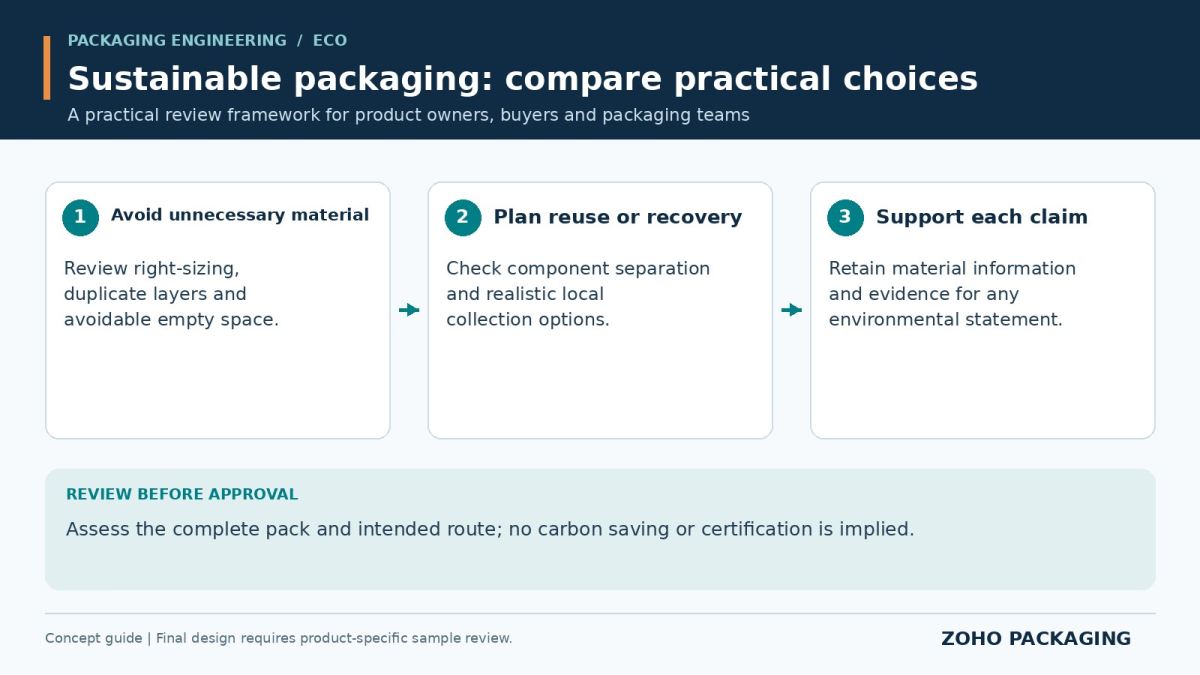 Assess the complete pack and intended route; no carbon saving or certification is implied.
Many companies think:
👉 “Use recyclable material = sustainable”
❌ Not enough
👉 If your packaging is:
- Mixed materials
- Hard to separate
- Oversized
👉 It still creates waste
The Problem with Most Packaging Systems
Even when materials are recyclable:
❌ Plastic + foam + paper mixed
❌ Difficult to recycle
❌ Ends up as landfill
👉 Real issue = design, not material
What Makes Packaging Truly Recyclable
1️⃣ Single-Material System
👉 Best solution:
✅ 100% paper-based packaging
Instead of:
❌ Foam + plastic + corrugated
👉 Use:
- Corrugated structure
- Paper cushioning
- Kraft inserts
👉 Result:
- Easy recycling
- Lower waste
2️⃣ Corrugated Packaging (Best Recyclable Material)
Corrugated board offers:
- High recyclability
- Renewable material source
- Strong structural performance
👉 It is one of the most recycled materials globally
3️⃣ Design for Recycling (DfR)
We design packaging to:
- Minimize mixed materials
- Simplify structure
- Improve separation
👉 Result:
- Faster recycling process
- Lower environmental impact
4️⃣ Reduce Coating & Lamination
Problem:
❌ Plastic coating
❌ Lamination
👉 These reduce recyclability
Solution:
- Use natural paper surface
- Avoid unnecessary coatings
5️⃣ Right-Sizing to Reduce Waste
Even recyclable material = waste if oversized
We:
- Optimize dimensions
- Reduce material usage
👉 Less material = less waste
Recyclable vs Non-Recyclable (Reality Check)
| Factor |
Mixed Packaging |
Recyclable System |
| Recycling Rate |
Low |
High |
| Waste |
High |
Reduced |
| ESG Compliance |
Weak |
Strong |
| Cost (Total) |
High |
Optimized |
Real Impact
👉 100% recyclable packaging systems
👉 Reduced landfill waste
👉 Improved ESG compliance
👉 Lower waste handling cost
Why This Matters for Your Business
Global buyers now require:
- Recyclable packaging
- ESG compliance
- Sustainable sourcing
👉 Especially:
- US market
- Europe market
- Retail chains
Common Mistakes
❌ Using recyclable material but mixed system
❌ Adding plastic coatings
❌ Ignoring packaging size
❌ No recycling design
👉 Result: not actually recyclable
Who Needs This Most
- Export manufacturers
- E-commerce brands
- Retail suppliers (Costco / Walmart)
- ESG-focused companies
CTA
♻️ Want fully recyclable packaging without performance loss?
👉 Get a Free Recyclable Packaging Plan
📊 FAQ
Q1: What are recyclable packaging materials?
Recyclable packaging materials are materials that can be collected, processed, and reused to create new products after their initial use. Common examples include corrugated cardboard, paper, and certain types of plastics. However, recyclability depends not only on the material itself but also on how the packaging is designed. If multiple materials are combined and difficult to separate, the packaging may not be effectively recyclable. Therefore, both material selection and design are important.
Q2: Why is corrugated packaging highly recyclable?
Corrugated packaging is highly recyclable because it is made primarily from paper fibers, which can be reprocessed multiple times. It is widely accepted in recycling systems around the world and has an established collection and processing infrastructure. Additionally, corrugated materials are derived from renewable resources and can be reused efficiently. This makes them one of the most sustainable packaging options available.
Q3: What is single-material packaging and why is it important?
Single-material packaging uses only one type of material, such as paper, instead of combining different materials like plastic and foam. This simplifies the recycling process and increases the likelihood that the packaging will be successfully recycled. Mixed-material packaging is often difficult to process and may end up in landfills. Therefore, single-material design is a key strategy for improving recyclability.
Q4: Does recyclable packaging mean biodegradable?
Recyclable and biodegradable are different concepts. Recyclable materials can be processed and reused, while biodegradable materials break down naturally over time. A material can be recyclable without being biodegradable, and vice versa. Corrugated paper is both recyclable and biodegradable, which makes it a strong choice for sustainable packaging.
Q5: Can recyclable packaging still be strong?
Yes, recyclable packaging can provide excellent strength when properly designed. Corrugated board can be engineered to achieve high load-bearing capacity and structural performance. By optimizing board grade and structural design, recyclable packaging can protect products effectively without relying on non-recyclable materials.
Q6: What reduces recyclability in packaging?
Recyclability is reduced by factors such as mixed materials, plastic coatings, lamination, and adhesives that are difficult to remove. These elements make it harder for recycling facilities to process the packaging. Simplifying design and using compatible materials improves recyclability.
Q7: How does packaging design affect recyclability?
Packaging design plays a critical role in recyclability because it determines how easily materials can be separated and processed. A well-designed package uses fewer materials, avoids unnecessary coatings, and simplifies structure. This makes recycling more efficient and increases the likelihood that the material will be reused.
Q8: Why is recyclability important for global markets?
Recyclability is important for global markets because many countries and companies have strict environmental regulations and sustainability goals. Businesses that use recyclable packaging are more likely to meet these requirements and gain access to international markets. It also improves brand image and customer trust.
Q9: Can recyclable packaging reduce cost?
Yes, recyclable packaging can reduce cost when designed efficiently. By minimizing material usage and improving logistics efficiency, companies can lower both material and shipping costs. Additionally, reducing waste can lower disposal costs. The key is to optimize the entire packaging system rather than focusing only on material.
Q10: How can I transition to recyclable packaging?
Transitioning to recyclable packaging involves evaluating current materials, identifying non-recyclable components, and redesigning the packaging system. This may include replacing mixed materials with paper-based solutions and simplifying the structure. Working with packaging engineers can help ensure a smooth and effective transition.