Eco-Friendly Is Not a Material
👉 It’s a Design Strategy
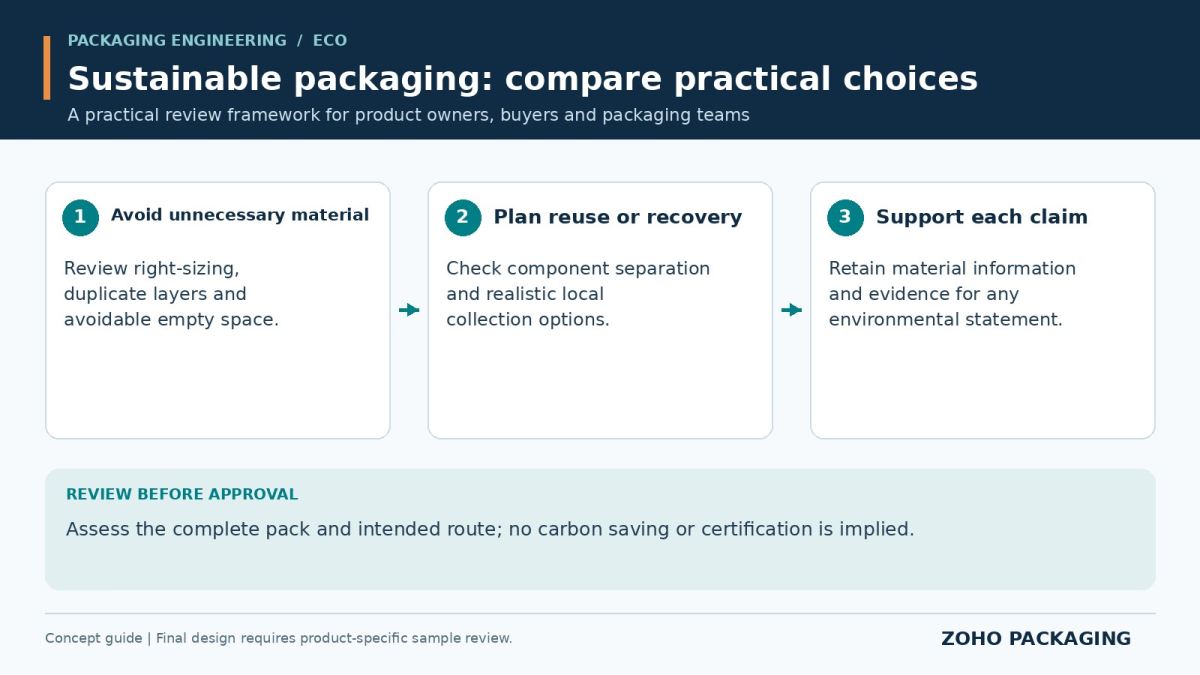 Assess the complete pack and intended route; no carbon saving or certification is implied.
Most companies think:
❌ Use eco material = eco packaging
👉 That’s wrong.
👉 Real eco-friendly packaging is:
Less material + better design + higher efficiency
The Biggest Waste in Packaging Is Design
Not material.
👉 Design mistakes cause:
- Oversized packaging
- Over-engineering
- Inefficient logistics
- Excess material usage
👉 Fix design → fix everything
What Eco-Friendly Design Actually Means
A true eco packaging design must achieve:
1️⃣ Minimal Material Usage
Use only what is necessary
2️⃣ Maximum Structural Efficiency
Strength through design, not thickness
3️⃣ Logistics Optimization
Reduce shipping volume & cost
4️⃣ Recyclability
Simple, single-material systems
Our Eco-Friendly Design Approach
🔧 1️⃣ Structural Optimization (Core)
We design:
- Load paths
- Force distribution
- Structural reinforcement
👉 Result:
- Less material
- Same or higher strength
📦 2️⃣ Right-Sizing Design
We eliminate:
❌ Empty space
❌ Oversized boxes
👉 Result:
- Lower shipping cost
- Reduced emissions
🚛 3️⃣ Logistics-Based Design
We design for:
- Pallet efficiency
- Container loading
- Warehouse handling
👉 Result:
- Higher efficiency
- Lower environmental impact
♻️ 4️⃣ Material Simplification
We reduce:
- Mixed materials
- Plastic components
👉 Move toward:
- Paper-based systems
- Recyclable structures
⚖️ 5️⃣ Balance Cost & Sustainability
Eco design must:
👉 Reduce cost
👉 Maintain performance
Not:
❌ Increase cost without benefit
Before vs After
| Factor |
Traditional Design |
Eco Design |
| Material Usage |
High |
Reduced |
| Packaging Size |
Oversized |
Optimized |
| Shipping Cost |
High |
Lower |
| Sustainability |
Low |
High |
Real Impact
👉 20%–40% material reduction
👉 15%–30% logistics improvement
👉 Significant waste reduction
👉 Eco design = business advantage
Common Design Mistakes
❌ Adding more material for safety
❌ Ignoring pallet & logistics
❌ Mixing materials
❌ No engineering logic
👉 Result: high cost + high waste
Who Needs Eco Design Most
- E-commerce brands
- Export manufacturers
- Automotive suppliers
- ESG-focused companies
What You Get
✔ Structural design optimization
✔ Cost reduction strategy
✔ Sustainable packaging system
✔ Logistics efficiency improvement
🌍 Want eco-friendly packaging that actually reduces cost?
👉 Get a Free Eco Packaging Design Plan
📊 FAQ
Q1: What is eco-friendly packaging design?
Eco-friendly packaging design refers to creating packaging systems that minimize environmental impact while maintaining functionality and cost efficiency. It involves reducing material usage, optimizing size, improving recyclability, and enhancing logistics efficiency. Unlike simply using eco materials, eco-friendly design focuses on the entire system. The goal is to achieve sustainability through better design rather than just material substitution.
Q2: How does design affect sustainability?
Design plays a critical role in sustainability because it determines how much material is used, how efficiently packaging is transported, and how easily it can be recycled. Poor design leads to oversized packaging, excessive material usage, and inefficient logistics, all of which increase environmental impact. By improving design, companies can reduce waste and improve efficiency simultaneously.
Q3: Can eco-friendly design reduce cost?
Yes, eco-friendly design often reduces cost by improving efficiency. Reducing packaging size lowers shipping cost, and optimizing material usage reduces material cost. While some eco solutions may have higher upfront costs, the overall system cost is often lower. The key is to focus on total cost rather than individual components.
Q4: Is eco-friendly packaging always recyclable?
Not all eco-friendly packaging is recyclable. Recyclability depends on material choice and design. Packaging that uses mixed materials or complex structures may be difficult to recycle. Eco-friendly design should prioritize simple, single-material systems to improve recyclability and reduce waste.
Q5: What industries benefit most from eco design?
Industries with high shipping volumes or strict sustainability requirements benefit the most from eco-friendly packaging design. This includes e-commerce, automotive, electronics, and export manufacturing. These industries can achieve significant cost savings and environmental benefits through optimization.
Q6: How does size optimization improve sustainability?
Size optimization reduces the amount of material used and improves shipping efficiency. Smaller packaging reduces dimensional weight, allowing more units per shipment and lowering transportation emissions. This makes size optimization one of the most effective sustainability strategies.
Q7: What is the role of structural design in eco packaging?
Structural design determines how forces are distributed within the packaging. A well-designed structure can achieve high strength with less material, reducing waste and cost. Poor structural design often leads to over-engineering and unnecessary material usage. Therefore, structural optimization is essential for eco-friendly packaging.
Q8: Can eco-friendly packaging still protect products effectively?
Yes, eco-friendly packaging can provide strong protection when properly designed. By optimizing structure and using appropriate materials, it is possible to achieve high performance while reducing environmental impact. Engineering design ensures that protection is not compromised.
Q9: What is the biggest mistake in eco packaging design?
The biggest mistake is focusing only on materials instead of the entire system. Simply switching to eco materials without improving design can lead to higher cost and lower efficiency. True eco-friendly packaging requires a holistic approach that includes structure, size, and logistics.
Q10: How can I start improving my packaging design?
The best way to start is by evaluating your current packaging system and identifying inefficiencies. This includes analyzing material usage, packaging size, and logistics performance. Working with experienced packaging engineers can help you develop effective solutions and implement improvements that deliver both cost savings and sustainability benefits.