Weight = Cost
👉 Every Gram You Ship Costs Money
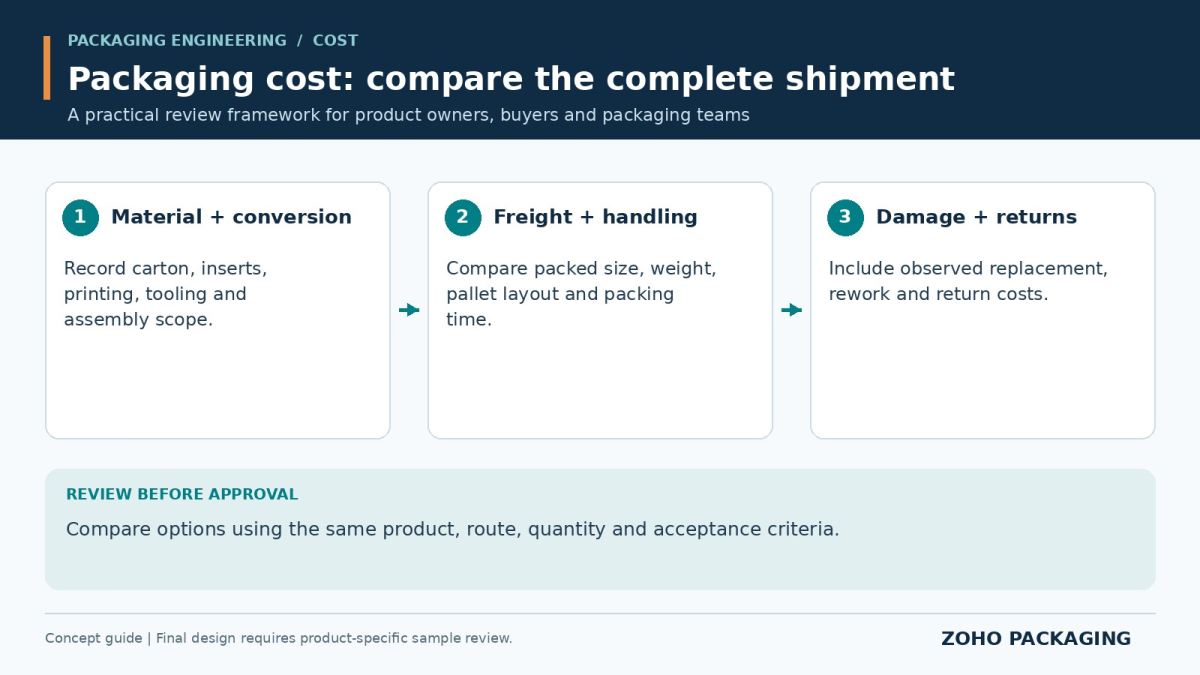 Compare options using the same product, route, quantity and acceptance criteria.
Most companies don’t realize:
👉 They are overpaying for weight
- Higher freight cost
- Lower shipment efficiency
- Higher carbon emissions
👉 Reduce weight → immediate savings
The Biggest Misconception
❌ Lightweight = weaker
👉 Wrong
👉 Real lightweight packaging =
Optimized structure + smart material selection
Where Weight Waste Comes From
❌ Over-Engineered Material
Too thick → unnecessary weight
❌ Oversized Packaging
More volume → more weight
❌ No Structural Design
Weak design → compensate with more material
👉 Result: heavy, inefficient packaging
Our Lightweight Packaging Strategy
🔧 1️⃣ Structural Optimization (Core)
We reduce weight by:
- Improving load paths
- Eliminating redundant material
- Reinforcing critical areas only
👉 Result:
- Same strength
- Less material
📦 2️⃣ Material Optimization
We select:
- Correct board grade
- Efficient flute combinations
👉 Avoid:
❌ Over-spec material
👉 Result:
- Reduced weight
- Maintained performance
📉 3️⃣ Size & Volume Reduction
Smaller packaging = lighter shipment
We:
- Eliminate empty space
- Improve product fit
👉 Result:
- Lower dimensional weight
- Better efficiency
🚛 4️⃣ Logistics Efficiency
Lighter packaging allows:
- More units per shipment
- Lower freight cost per unit
👉 Especially critical for:
♻️ 5️⃣ Sustainability Impact
Less weight =
- Lower fuel consumption
- Lower carbon emissions
👉 Lightweight = eco-friendly by design
Before vs After
| Factor |
Before |
After |
| Packaging Weight |
High |
Reduced |
| Shipping Cost |
High |
Lower |
| Efficiency |
Low |
Improved |
| Carbon Impact |
High |
Reduced |
Real Impact
👉 10%–30% weight reduction
👉 15%–25% shipping cost savings
👉 Significant emission reduction
👉 Lightweight = direct ROI
Common Mistakes
❌ Simply using thinner material
❌ Ignoring structure
❌ Reducing weight without testing
❌ No logistics consideration
👉 Result: higher damage risk
Who Needs Lightweight Packaging
- Export manufacturers
- E-commerce brands
- Automotive suppliers
- High-volume logistics companies
What You Get
✔ Lightweight packaging design
✔ Cost reduction strategy
✔ Structural optimization
✔ Sustainability improvement
🚀 Want to reduce shipping cost immediately?
👉 Get a Free Lightweight Packaging Analysis
📊 FAQ
Q1: What is lightweight packaging?
Lightweight packaging refers to reducing the weight of packaging materials while maintaining or improving performance. This is achieved through structural optimization, material selection, and efficient design rather than simply using thinner materials. The goal is to reduce shipping cost, improve efficiency, and lower environmental impact without compromising product protection.
Q2: How does reducing packaging weight lower cost?
Reducing packaging weight lowers cost by decreasing freight charges, especially in air shipping where weight is a major factor. Lighter packaging also allows more units to be shipped within the same weight limit, improving efficiency. Over time, even small reductions in weight can result in significant cost savings.
Q3: Can lightweight packaging still be strong?
Yes, lightweight packaging can still be strong when designed correctly. By optimizing structure and reinforcing critical areas, it is possible to maintain or even improve strength while reducing weight. Engineering design ensures that performance is not compromised.
Q4: What is the biggest source of unnecessary weight?
The biggest source of unnecessary weight is over-engineering, where packaging uses more material than needed. This often happens when companies rely on thicker materials instead of improving design. Eliminating unnecessary material is key to reducing weight.
Q5: How does size affect packaging weight?
Size affects weight because larger packaging requires more material and increases shipping volume. Oversized packaging not only adds weight but also increases dimensional weight, leading to higher shipping cost. Reducing size improves both weight and efficiency.
Q6: Is lightweight packaging suitable for heavy products?
Yes, lightweight packaging can be suitable for heavy products when properly designed. Structural optimization ensures that weight reduction does not compromise load-bearing capacity. Engineering plays a critical role in achieving this balance.
Q7: How does lightweight packaging improve sustainability?
Lightweight packaging improves sustainability by reducing material usage and lowering transportation emissions. Less weight means less fuel consumption during shipping, which reduces carbon footprint. This makes lightweight design an effective sustainability strategy.
Q8: What industries benefit most from lightweight packaging?
Industries with high shipping volumes or expensive freight costs benefit the most from lightweight packaging. This includes e-commerce, automotive parts, electronics, and export manufacturing. These industries can achieve significant cost savings through optimization.
Q9: What is the risk of reducing packaging weight incorrectly?
Reducing packaging weight without proper design can increase the risk of damage. Simply using thinner materials without considering structure can lead to failure during transportation. Engineering-based design is essential to ensure that weight reduction does not compromise performance.
Q10: How can I start reducing packaging weight?
The best way to start is by analyzing your current packaging system and identifying areas where material can be reduced without affecting performance. Working with packaging engineers can help you develop optimized solutions that deliver both cost savings and improved efficiency.