Your Packaging Doesn’t Fail in the Factory
It Fails During Shipping
Most companies think their packaging is fine because:
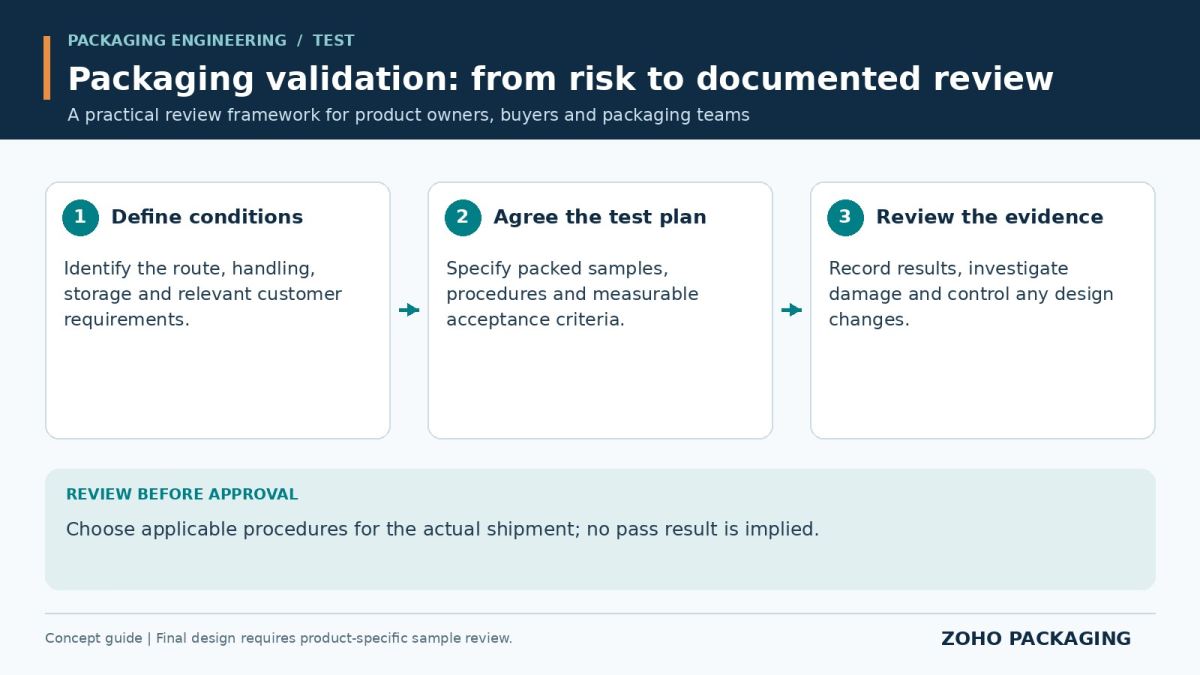 Choose applicable procedures for the actual shipment; no pass result is implied.
- it looks strong
- it passes visual inspection
- it survives in the warehouse
But the real question is:
Has your packaging survived real-world transport conditions?
👉 Because during shipping, your product will face:
- drops
- vibration
- compression
- repeated handling
What Is ISTA Testing?
ISTA (International Safe Transit Association) testing simulates real shipping conditions.
It answers one critical question:
Will your packaging survive the journey?
What Is a Drop Test?
Drop testing simulates what happens when:
- packages are dropped during handling
- cartons fall from conveyors
- boxes slip during loading/unloading
Typical Drop Heights
- small parcel: 60–100 cm
- heavy carton: 30–60 cm
👉 And yes—this happens more often than you think.
What ISTA Testing Includes
1. Drop Test
- corner drop
- edge drop
- flat drop
👉 tests weakest points of packaging
2. Vibration Test
- simulates truck / sea transport
- continuous shaking over time
3. Compression Test
- stacking pressure
- long-term load simulation
4. Environmental Conditioning
Reality
Packaging failure is usually a combination of all these factors—not just one.
ISTA 1A vs ISTA 3A — What’s the Difference?
ISTA 1A(Basic Test)
- simple drop + compression
- no real transport simulation
- low cost
👉 Suitable for basic validation
ISTA 3A(Advanced Test)
- includes vibration + sequence testing
- simulates full delivery process
- much closer to real-world conditions
👉 Suitable for:
- e-commerce
- export packaging
- fragile products
Key Insight
ISTA 1A tells you if your box is strong
ISTA 3A tells you if your packaging system works
Why Most Packaging Fails ISTA Testing
❌ No Structural Design
- packaging built on experience
- not engineering
❌ No Load Distribution
- impact force not absorbed
- transferred directly to product
❌ Wrong Cushioning Strategy
- too little protection
- or wrong material
❌ Ignoring Real Shipping Conditions
- only test in ideal environment
- not actual logistics scenario
What Happens When You Don’t Test
Hidden Cost
- product damage
- return logistics cost
- customer complaints
- brand damage
Real Impact
Even a 2–3% damage rate can destroy profit margins.
Key Insight
Testing cost is always cheaper than failure cost.
Engineering Approach to Passing ISTA
Step 1 — Impact Analysis
- product fragility
- drop risk level
Step 2 — Cushioning Design
- shock absorption
- energy distribution
Step 3 — Structural Reinforcement
- protect weak points
- improve load path
Step 4 — System Testing
- simulate real transport
- validate performance
Step 5 — Optimization
- reduce material
- improve efficiency
Real Case — Drop Test Failure to Success
Before
- product damaged after drop
- internal movement
- weak cushioning
After
- redesigned internal support
- optimized cushioning material
- improved outer structure
Result
✔ passed drop test
✔ damage rate ↓ from 3% → <0.5%
✔ improved customer satisfaction
Cushioning vs Structure — The Truth
Most companies think:
👉 add more cushioning = safer
Wrong
If structure is weak:
- impact force still reaches product
Correct Approach
Structure absorbs load
Cushioning absorbs impact
👉 You need both.
When Do You Need ISTA Testing?
You should test if:
- exporting products
- selling on e-commerce
- shipping fragile items
- facing frequent damage issues
👉 If your product travels, testing is not optional.
Zoho Packaging Testing Approach
What We Do
- packaging system analysis
- drop test simulation
- structure + cushioning optimization
- real-world validation
What You Get
✔ reduced damage rate
✔ predictable shipping performance
✔ optimized packaging cost
Final Insight
Most companies wait until products break.
Smart companies do this:
Break the packaging in testing—before it breaks in reality.
FAQ
1. What is ISTA testing?
ISTA testing is a packaging validation process that simulates real-world shipping conditions like drops, vibration, and compression.
2. What is a drop test in packaging?
A drop test evaluates how packaging performs when dropped from specific heights, testing impact resistance.
3. What is the difference between ISTA 1A and ISTA 3A?
ISTA 1A is a basic strength test, while ISTA 3A simulates full shipping conditions including vibration and handling.
4. Why is packaging testing important?
It helps prevent product damage, reduce returns, and improve customer satisfaction.
5. How often should packaging be tested?
Whenever you launch a new product, change packaging design, or encounter damage issues.
6. Can packaging pass tests but still fail in real shipping?
Yes, if testing conditions do not match real logistics scenarios.
7. What products need ISTA testing the most?
Electronics, food, fragile items, and export goods benefit the most.
8. Does better cushioning always solve damage problems?
No. Without proper structural design, cushioning alone is not effective.
9. How much does packaging failure cost?
Even a small damage rate (2–5%) can significantly impact profit due to returns and replacements.
10. How do I start packaging testing?
Work with a packaging engineering partner to analyze, design, test, and optimize your packaging system.