Wrong Label = Shipment Rejected
In dangerous goods shipping, labeling is not a detail.
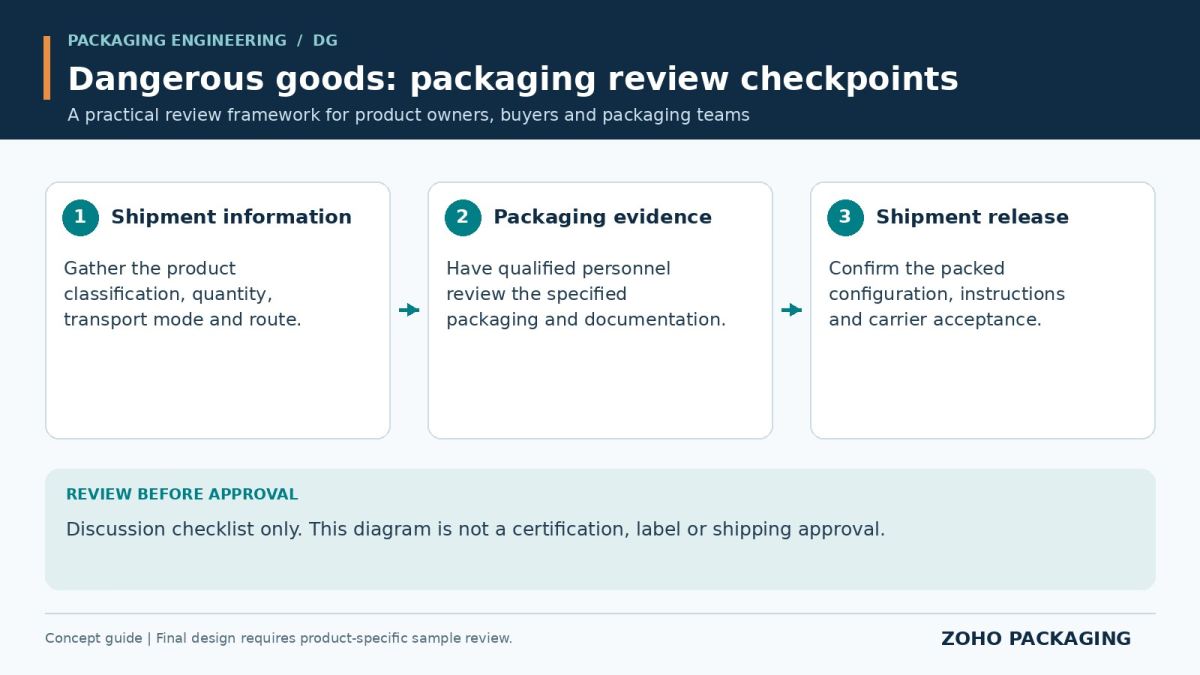 Discussion checklist only. This diagram is not a certification, label or shipping approval.
👉 It is a pass / fail checkpoint
Even if your packaging is correct:
❌ Wrong label
❌ Missing marking
❌ Incorrect UN code
👉 Your shipment will not move.
What Is UN Marking?
UN marking is a standardized code printed on packaging that identifies:
- Packaging type
- Material
- Performance level
- Maximum allowed weight
Example:
👉 4G/Y30/S
How to Read a UN Code
| Element |
Meaning |
| 4G |
Fiberboard box |
| Y |
Medium danger level |
| 30 |
Max weight (kg) |
| S |
Solid goods |
👉 Misreading this code can result in using the wrong packaging.
Required Labels for Dangerous Goods
A compliant shipment must include:
✔ UN specification marking
✔ Hazard class label (Class 1–9)
✔ Handling labels (fragile, orientation)
✔ Lithium battery mark (if applicable)
Common Labeling Mistakes
We frequently see:
❌ Wrong hazard class
❌ Missing lithium battery label
❌ Incorrect label size
❌ Labels placed incorrectly
👉 Result:
- Shipment delays
- Rejection at port
- Additional inspection
Placement Matters More Than You Think
Labels must be:
✔ Clearly visible
✔ Not covered or folded
✔ Properly oriented
✔ Placed on correct sides
👉 Even correct labels can fail if placed incorrectly
Labeling Is Not Separate from Packaging
Labeling must match:
- Packaging type
- UN certification
- Product classification
👉 If these don’t align → compliance failure
Engineering Approach
At Zoho Packaging, we integrate:
✔ Packaging design
✔ Labeling system
✔ Documentation
👉 So everything works together — not separately
Real Business Impact
Correct labeling helps you:
✔ Avoid shipment rejection
✔ Reduce inspection delays
✔ Improve logistics efficiency
✔ Maintain customer trust
Zoho One-Line
👉 Your shipment doesn’t fail at the port — it fails at the label.
CTA
Not sure if your labeling is correct?
Send us your packaging details and product classification.
👉 We’ll verify your labeling system before it becomes a problem.
FAQ(10題 × 每題約150字)
1. What is UN marking on packaging?
UN marking is a standardized code printed on packaging that indicates its certification and specifications. It includes information such as packaging type, material, performance level, and maximum allowed weight. This marking ensures that the packaging meets international standards for transporting dangerous goods. Without correct UN marking, shipments may be rejected.
2. Why are labeling requirements so strict?
Labeling requirements are strict because they provide critical safety information during transport. Labels help handlers identify the type of hazard and take appropriate precautions. Incorrect or missing labels can lead to accidents, delays, or legal issues. Compliance ensures safe handling and smooth logistics.
3. What happens if I use the wrong label?
Using the wrong label can result in shipment rejection, delays, fines, or additional inspections. Even small errors, such as incorrect class or label size, can cause compliance issues. It is important to verify all labels before shipping.
4. What labels are required for lithium batteries?
Lithium battery shipments typically require a lithium battery mark, hazard label (if applicable), and UN packaging marking. Additional handling labels may also be required depending on the shipping method and regulations. Proper labeling is essential for compliance.
5. Where should labels be placed on packaging?
Labels must be placed in visible locations, typically on the outer surface of the package. They should not be covered, folded, or obscured. Correct placement ensures that handlers can easily identify the contents and handle them safely.
6. Does label size matter?
Yes. Label size is regulated and must meet specific requirements. Labels that are too small or incorrectly formatted may not be accepted. Proper sizing ensures visibility and compliance with international standards.
7. Can I reuse old labels?
No. Old labels should not be reused, especially if they are damaged or no longer relevant to the shipment. Using incorrect or outdated labels can lead to serious compliance issues.
8. Do labeling requirements differ by country?
Yes. While UN standards are widely accepted, some countries and carriers may have additional requirements. It is important to check specific regulations for your destination and transport method.
9. How can I ensure my labels are correct?
You should verify labels based on product classification, packaging type, and shipping regulations. Working with experienced professionals helps ensure accuracy and compliance.
10. Is labeling part of the packaging system?
Yes. Labeling is an integral part of the packaging system. It must align with the packaging design, certification, and documentation. Treating labeling separately often leads to compliance failures.