Shipping Dangerous Goods Is Not Just Logistics — It’s a System
Most companies think exporting dangerous goods is about:
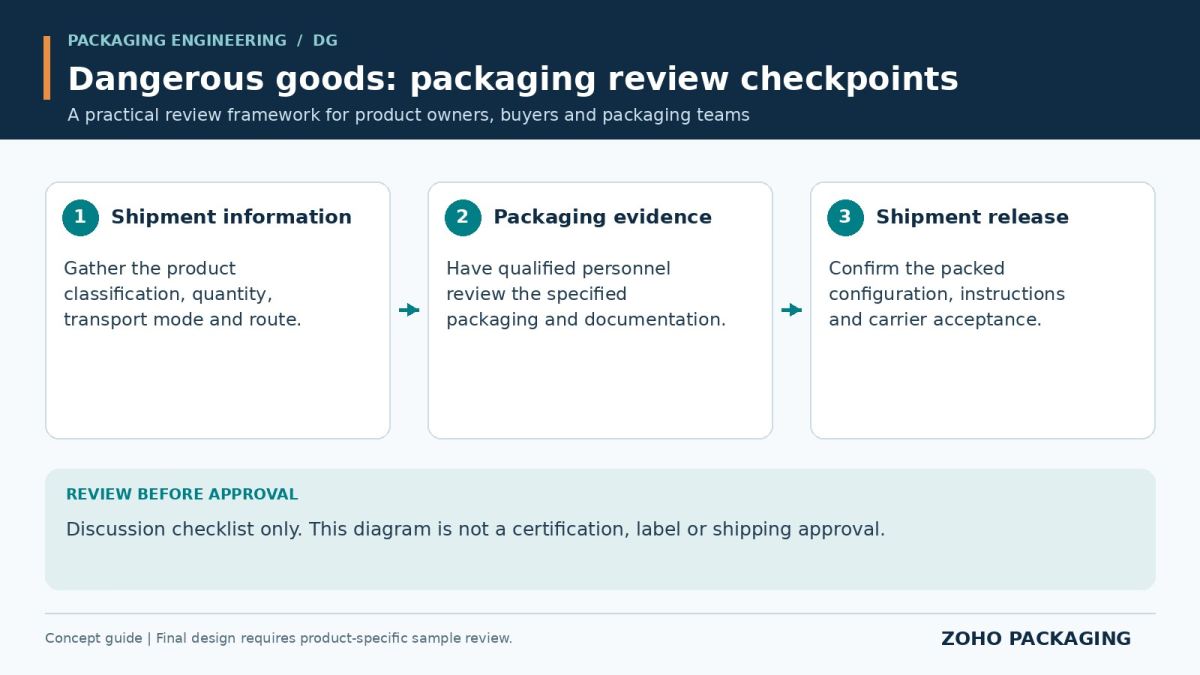 Discussion checklist only. This diagram is not a certification, label or shipping approval.
👉 Finding a freight forwarder
But the reality is:
👉 If your compliance system is wrong — nothing moves
What Is Dangerous Goods Export Compliance?
It is a complete system that ensures your shipment meets:
✔ Packaging requirements
✔ Labeling regulations
✔ Documentation standards
✔ Transport restrictions
The 4 Core Elements of Compliance
1. UN Certified Packaging
Your packaging must:
- Match product type
- Meet UN standards
- Pass testing
👉 Wrong packaging = immediate rejection
2. Correct Labeling
Includes:
- Hazard class labels
- UN marking
- Handling instructions
👉 Incorrect labels = shipment delay
3. Documentation
Required documents may include:
✔ SDS (Safety Data Sheet)
✔ Dangerous Goods Declaration
✔ Packing list
👉 Missing documents = shipment blocked
4. Transport Compliance
Depends on:
- Air vs sea freight
- Carrier requirements
- Country regulations
👉 Same product, different rules
Why Most Shipments Get Stuck
We see these issues constantly:
❌ Packaging not compliant
❌ Labels incorrect or missing
❌ Documentation incomplete
❌ Misunderstanding regulations
👉 Result:
- Port rejection
- Shipment delay
- Extra costs
Compliance Is Not a Checklist — It’s a System
Many companies treat compliance as separate steps.
But in reality:
👉 Packaging + labeling + documents must align
If one fails → everything fails
Engineering Approach
At Zoho Packaging, we build:
👉 A complete export-ready system
1. Product Risk Analysis
→ Hazard classification, shipping method
2. Packaging Design
→ UN compliant structure
3. Labeling System
→ Correct, visible, aligned
4. Documentation Support
→ Ready for inspection
Real Business Impact
A correct compliance system helps you:
✔ Avoid shipment rejection
✔ Reduce delays and inspection time
✔ Lower logistics risk
✔ Improve export reliability
Zoho One-Line
👉 Dangerous goods don’t fail at shipping — they fail at compliance.
CTA
Not sure if your shipment is compliant?
Send us your product details and shipping plan.
👉 We’ll identify risks before they become delays.
FAQ
1. What is dangerous goods export compliance?
Dangerous goods export compliance refers to the process of ensuring that hazardous materials are packaged, labeled, documented, and transported according to international regulations. It involves multiple elements working together, including UN-certified packaging, correct labeling, and proper documentation. Without full compliance, shipments may be delayed or rejected.
2. Why is compliance important for shipping dangerous goods?
Compliance is essential because dangerous goods can pose risks during transportation. Proper packaging and labeling ensure safety for handlers and the environment. In addition, regulatory compliance prevents shipment delays, fines, and rejection at ports or by carriers.
3. What documents are required for dangerous goods shipping?
Common documents include the Safety Data Sheet (SDS), Dangerous Goods Declaration, and packing list. Additional documents may be required depending on the product and destination. Missing or incorrect documentation can result in shipment delays.
4. What happens if my shipment is not compliant?
Non-compliant shipments may be rejected, delayed, or subject to fines. In some cases, they may require repackaging or additional inspection. This can significantly increase costs and lead time.
5. Does compliance differ between air and sea shipping?
Yes. Air transport is generally more restrictive, with stricter rules on packaging, quantity, and labeling. Sea transport may allow more flexibility but still requires compliance with international standards. Each method must be evaluated separately.
6. How do I know if my product is classified as dangerous goods?
You can determine this by reviewing the Safety Data Sheet (SDS) or consulting regulatory guidelines. Hazard classification depends on the chemical or physical properties of the product. Proper classification is critical for compliance.
7. Can I rely on my freight forwarder for compliance?
Freight forwarders can assist, but they do not replace proper packaging and compliance planning. The responsibility ultimately lies with the shipper. Working with a packaging expert ensures that all requirements are met.
8. Is UN packaging always required?
Not always, but for most dangerous goods shipments, UN-certified packaging is required. The requirement depends on the type of goods, quantity, and transport method. Using proper packaging reduces risk and ensures compliance.
9. How can I reduce compliance risks?
The best way is to treat compliance as a system rather than separate tasks. This includes aligning packaging, labeling, and documentation. Working with experienced providers helps identify and eliminate risks early.
10. Can compliance reduce overall shipping cost?
Yes. While compliance may increase upfront costs, it reduces the risk of delays, rejections, and damage. This lowers the total cost of shipping and improves operational efficiency.