Palletized Export Packaging That Maximizes Efficiency and Protects Cargo
In export logistics, packaging is not just about the box.
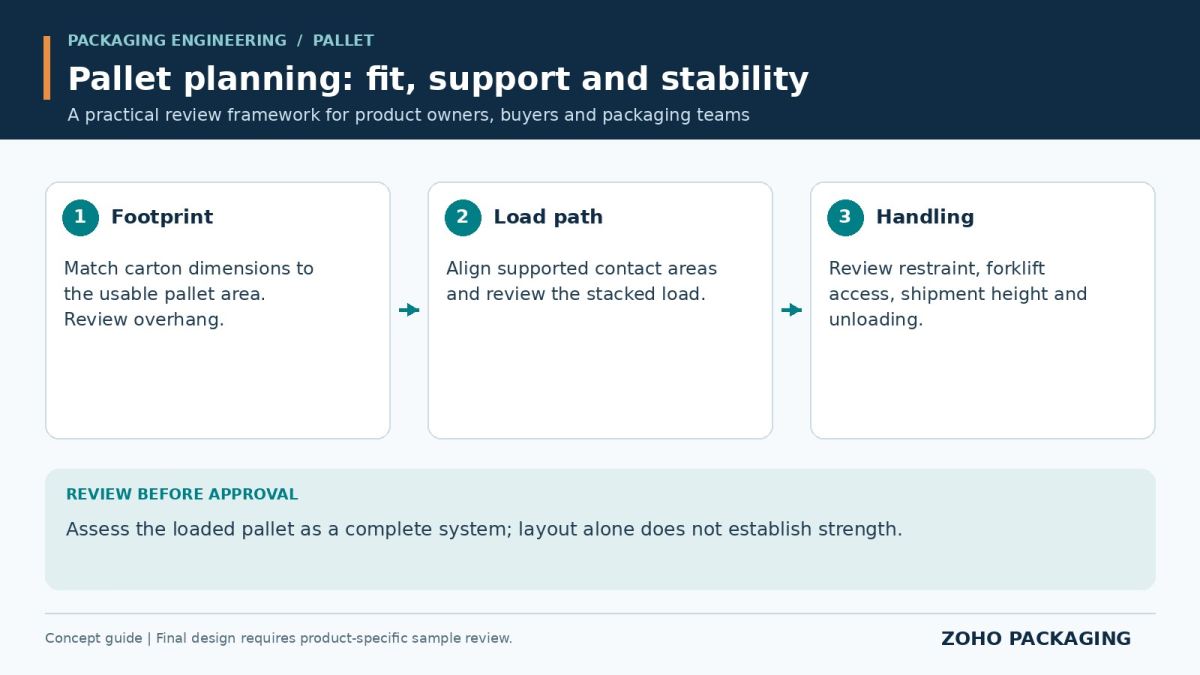 Assess the loaded pallet as a complete system; layout alone does not establish strength.
It is about how products are stacked, stabilized, and shipped as a system.
Palletized export packaging is the key to:
- reducing shipping cost
- improving handling efficiency
- preventing cargo damage
- maximizing container utilization
At Zoho Packaging, we design packaging based on pallet logic first, box second.
Why Palletized Packaging Matters in Export
Without pallet optimization, even good packaging can fail.
Common problems include:
- unstable stacking leading to collapse
- wasted container space
- increased shipping cost per unit
- product shifting during transport
- inefficient warehouse handling
Palletized packaging solves these issues by turning individual cartons into a stable, transport-ready unit load.
Core Principles of Palletized Export Packaging
1. Pallet Layout Optimization
The goal is simple:
👉 Fit more products safely into less space
We design:
- carton dimensions based on pallet size
- optimized stacking patterns (N1 / N2 layouts)
- full pallet utilization without overhang
2. Container Loading Efficiency
Pallet design directly affects container loading.
We optimize:
- pallet dimensions vs container size
- number of pallets per container
- loading patterns for maximum efficiency
Better design = lower cost per shipment.
3. Load Stability & Anti-Shifting Design
During transport, pallets face:
- vibration
- sudden movement
- uneven handling
We ensure:
- stable stacking structure
- proper weight distribution
- compatibility with stretch wrap and strapping
4. Carton Strength for Stacked Loads
Palletized cargo is stacked vertically.
Packaging must handle:
- top load pressure
- long-term stacking
- environmental conditions
This requires proper BCT/ECT-based design logic.
5. Handling Efficiency (Warehouse to Delivery)
Palletized packaging improves:
- forklift handling
- loading/unloading speed
- warehouse organization
- shipment accuracy
This reduces labor cost and operational errors.
Standard Pallet Sizes & Design Strategy
Typical pallet sizes:
- 1200 × 1000 mm (EU / Asia standard)
- 1200 × 800 mm (Euro pallet)
- 48" × 40" (US standard pallet)
Good palletized packaging design ensures:
- no overhang
- tight alignment
- stable stacking height
Example: How Pallet Optimization Reduces Cost
Without optimization:
- wasted space inside cartons
- poor pallet layout
- fewer units per shipment
With optimized pallet packaging:
- higher carton density
- more products per pallet
- more pallets per container
👉 Result: Lower shipping cost per unit
Common Palletized Packaging Mistakes
- carton size not matching pallet dimensions
- overhang causing instability
- uneven weight distribution
- ignoring container loading logic
- weak cartons collapsing under stacking
These mistakes directly increase cost and damage risk.
Palletized Packaging for Different Industries
Industrial products
→ heavy load + stable stacking
E-commerce bulk shipping
→ efficiency + fast handling
Retail distribution (RRP / SRP)
→ ready-to-display + transport stability
Electronics & fragile goods
→ stable + shock-protected
Export manufacturing
→ repeatable + cost-optimized
Palletized Packaging = Cost Control System
Most companies focus on unit packaging cost.
But real savings come from:
- better container utilization
- reduced damage
- faster operations
- fewer handling errors
Good palletized packaging reduces total logistics cost — not just packaging cost.
Our Palletized Packaging Approach
We design based on:
- product size and weight
- pallet dimensions
- container loading plan
- stacking requirements
- transport conditions
Our solutions include:
- pallet-optimized carton design
- full pallet packaging systems
- heavy load pallet packaging
- export-ready pallet configurations
- packaging redesign for cost reduction
Built for Real Logistics Performance
Palletized packaging is not theory.
It must work in:
- factories
- warehouses
- containers
- global supply chains
At Zoho Packaging, we design packaging systems that perform across the entire logistics process.
Because the real goal is not to ship boxes.
👉 It is to ship efficiently, safely, and profitably.
1. What is palletized export packaging?
Palletized export packaging is a system where products are packed and arranged on pallets for efficient transport. It combines carton design, stacking patterns, and pallet configuration to improve stability, handling, and shipping efficiency.
2. Why is pallet optimization important in export shipping?
Pallet optimization ensures maximum use of space, reduces shipping cost, and improves load stability. Without it, companies waste container space and increase the risk of damage during transport.
3. How do you calculate how many boxes fit on a pallet?
It depends on carton size and pallet dimensions. By aligning carton dimensions with pallet size, you can maximize the number of boxes per layer and total stacking height.
4. What is pallet overhang and why is it a problem?
Overhang occurs when cartons extend beyond the pallet edge. This reduces stability and increases the risk of damage during transport.
5. Can palletized packaging reduce shipping cost?
Yes. By improving space utilization and loading efficiency, palletized packaging reduces cost per unit and increases overall logistics efficiency.
6. What industries use palletized packaging?
Industries such as manufacturing, electronics, automotive, retail, and e-commerce all use palletized packaging for efficient distribution.
7. How does palletized packaging improve safety?
It stabilizes the load, reduces movement, and allows safer handling with forklifts and warehouse equipment.
8. What is the best pallet size for export?
Common sizes include 1200×1000 mm and 48"×40". The best choice depends on your target market and logistics requirements.
9. Can palletized packaging prevent product damage?
Yes. Proper stacking, load distribution, and secure wrapping reduce the risk of shifting and impact damage.
10. What is the biggest mistake in pallet packaging?
Ignoring pallet and container integration during packaging design, leading to inefficiency and higher costs.