Shockproof Export Packaging That Prevents Impact Damage
In international shipping, impact is unavoidable.
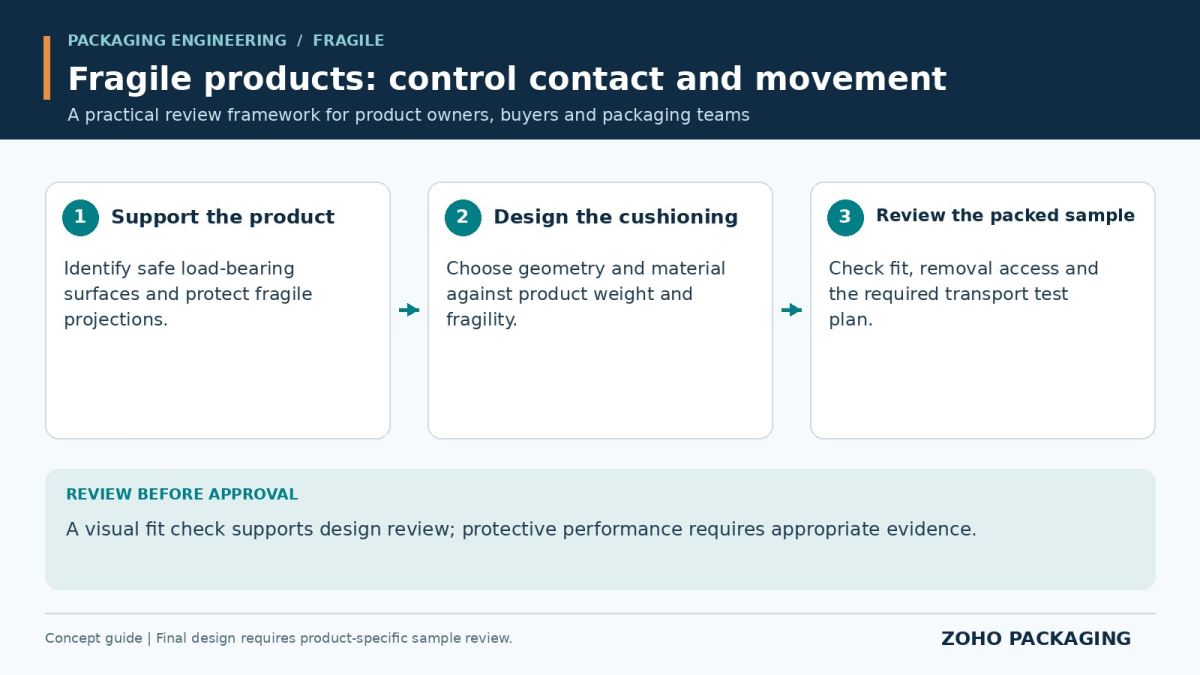 A visual fit check supports design review; protective performance requires appropriate evidence.
Products are:
- dropped
- stacked
- pushed
- shaken
- transferred multiple times
Shockproof export packaging is designed to absorb, distribute, and reduce impact force — preventing damage before it happens.
At Zoho Packaging, we engineer packaging systems that protect products from real-world handling conditions, not ideal scenarios.
Why Shockproof Packaging Is Critical
Most shipping damage does not come from compression.
It comes from:
- drops during handling
- vibration during transport
- sudden impacts during loading/unloading
Even a small drop can cause:
- cracks
- scratches
- internal component failure
- product malfunction
👉 Especially for high-value products, one impact = total loss.
How Shock Damage Happens
During export shipping, products face:
- airport handling (fast and rough)
- warehouse stacking and movement
- container shifting during transport
- vibration over long distances
Without proper packaging:
👉 impact force goes directly into the product.
Core Principles of Shockproof Export Packaging
1. Impact Absorption Design
The goal is to absorb energy before it reaches the product.
We design:
- cushioning systems
- energy-dissipating structures
- buffer zones inside packaging
2. Suspension & Isolation Structure
Instead of resisting impact, we isolate the product.
Methods include:
- suspended packaging systems
- floating structures
- controlled movement zones
3. Internal Fit & Movement Control
Loose products are dangerous.
We ensure:
- tight fit design
- no internal movement
- stable positioning
Movement = impact amplification.
4. Multi-Layer Protection System
Shockproof packaging often includes:
- outer corrugated structure
- internal cushioning layer
- product-specific support system
Each layer plays a role in protection.
5. Vibration Resistance for Long Distance Shipping
Not all damage comes from drops.
Continuous vibration can cause:
- internal wear
- surface scratches
- component failure
We design packaging to minimize vibration transfer.
Common Shock Damage Problems
- cracked products after shipping
- scratched surfaces
- internal component damage
- product shifting inside packaging
- packaging looks fine, product is damaged
👉 The worst part: damage is often invisible until use.
Shockproof Packaging for Different Industries
Electronics
→ anti-shock + precision fit + anti-vibration
Automotive parts
→ anti-scratch + heavy impact resistance
Medical devices
→ high protection + zero tolerance for damage
Glass / fragile items
→ cushioning + suspension design
High-value products
→ risk reduction + claim prevention
Shockproof Packaging vs Standard Packaging
| Feature |
Standard Packaging |
Shockproof Packaging |
| Protection |
Basic |
Advanced impact control |
| Internal design |
Minimal |
Engineered cushioning |
| Movement control |
Limited |
Controlled & fixed |
| Damage risk |
Higher |
Significantly reduced |
Reduce Damage, Reduce Cost
Shipping damage costs more than packaging.
It includes:
- product replacement
- return logistics
- customer dissatisfaction
- brand reputation loss
A properly designed shockproof packaging system can:
- reduce damage rate
- improve delivery reliability
- protect high-value shipments
- lower total operational cost
Our Shockproof Packaging Approach
We design based on:
- product fragility level
- weight and structure
- shipping method (air / sea)
- drop and vibration risk
- customer requirements
Our solutions include:
- custom cushioning systems
- anti-shock corrugated packaging
- suspension packaging design
- vibration-resistant packaging
- export-ready protective packaging systems
Built for Real Handling Conditions
Shipping is unpredictable.
Drops happen. Impacts happen.
At Zoho Packaging, we design packaging that expects impact — and survives it.
Because:
👉 You cannot control handling.
But you can control protection.
FAQ(每題150字以上)
1. What is shockproof export packaging?
Shockproof export packaging is designed to protect products from impact, drops, and vibration during shipping. It uses cushioning, structural design, and internal supports to absorb and reduce force before it reaches the product.
2. What causes damage during shipping?
Damage is usually caused by drops, impacts, vibration, and handling errors during transport. These forces can damage products even if the outer packaging looks intact.
3. How does shockproof packaging work?
It absorbs and distributes impact energy through cushioning materials and structural design. This prevents force from directly affecting the product.
4. What products need shockproof packaging?
Fragile items, electronics, medical devices, glass products, and high-value goods all require shockproof packaging to prevent damage.
5. Is cushioning enough for protection?
Not always. Cushioning must be combined with proper structural design and product fixation to be effective.
6. What is vibration damage?
Vibration damage occurs when products experience continuous small movements during transport, causing internal wear or surface damage.
7. Can shockproof packaging reduce returns?
Yes. By preventing damage, it reduces returns, complaints, and replacement costs.
8. What is the biggest mistake in protective packaging?
Allowing product movement inside the packaging, which increases impact force.
9. Is shockproof packaging expensive?
It may cost more than basic packaging, but it significantly reduces damage-related costs.
10. How do you choose the right shockproof packaging?
You need to consider product fragility, shipping method, handling risk, and required protection level. Custom design ensures optimal performance.