Material Selection Engineering — Choosing the Right Material, Not the Thickest
Most companies think stronger packaging means:
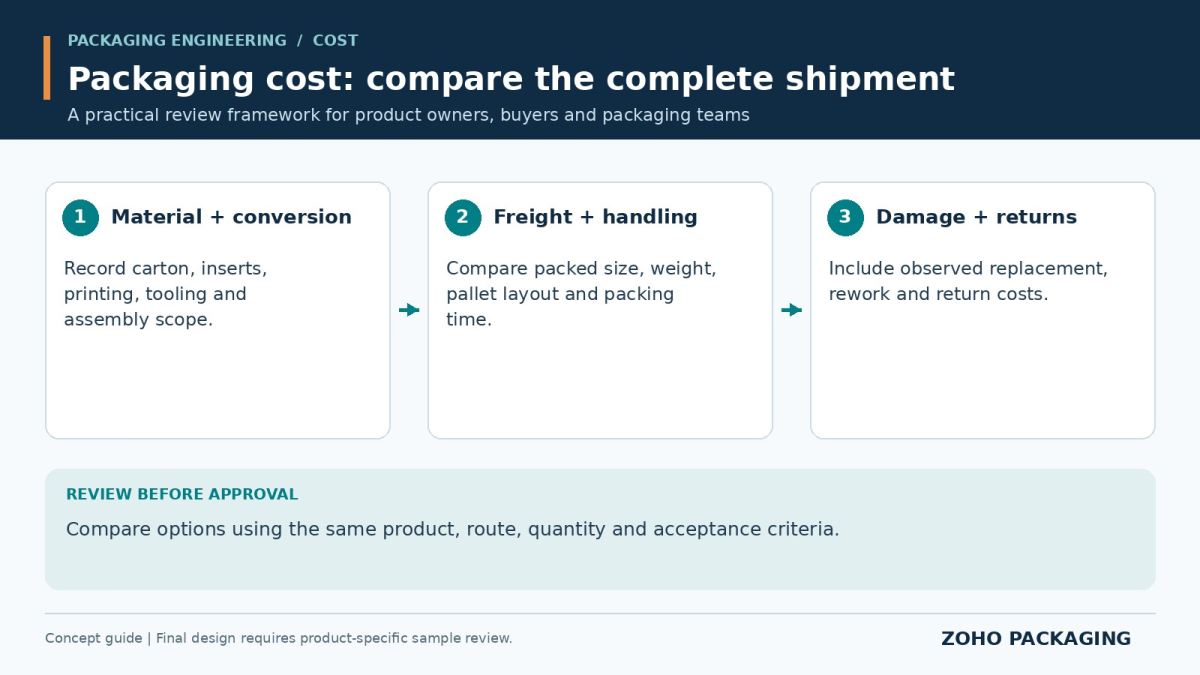 Compare options using the same product, route, quantity and acceptance criteria.
👉 thicker material
But that leads to:
- higher cost
- unnecessary weight
- inefficient shipping
The real solution is:
👉 material selection engineering
At Zoho Packaging, we choose materials based on performance, structure, and logistics, not assumptions.
Why Material Selection Matters
Wrong material choice leads to:
- over-packaging (waste)
- under-protection (damage)
- higher shipping cost
- inconsistent performance
👉 Material is the foundation of packaging performance.
The Goal: Balance Strength, Cost, and Efficiency
Good material selection must balance:
- protection
- weight
- cost
- logistics efficiency
👉 Not just one factor.
Key Factors in Material Selection
1. Product Weight
Heavier products require:
- stronger material
- reinforced structure
2. Product Sensitivity
Fragile products need:
- cushioning compatibility
- shock absorption
3. Shipping Method
Different methods require different materials:
- air freight → lightweight
- sea freight → moisture resistance
- industrial shipping → heavy duty
4. Environmental Conditions
Consider:
- humidity
- temperature
- storage duration
5. Stacking Requirements
Material must support:
- load pressure
- stacking height
Corrugated Material Selection (Key Engineering Area)
Corrugated board selection includes:
- flute type (A, B, C, E, etc.)
- board combination (single wall, double wall)
- ECT value
- BCT performance
👉 Material + structure = performance
Material vs Structure — What Matters More?
| Factor |
Material |
Structure |
| Strength |
Medium |
High |
| Cost impact |
High |
Medium |
| Efficiency |
Medium |
High |
| Optimization potential |
Limited |
High |
👉 Structure often matters more than thickness.
Common Material Selection Mistakes
- choosing the thickest material
- ignoring logistics conditions
- not considering stacking
- over-specifying material
- using one material for all products
Applications of Material Engineering
Export packaging
→ balance weight and strength
Electronics packaging
→ combine protection and ESD
Industrial packaging
→ heavy load support
E-commerce packaging
→ lightweight + efficiency
Reduce Cost Through Better Material Selection
Smart material selection:
- reduces material cost
- lowers shipping cost
- improves performance
- increases efficiency
👉 Especially at scale.
Our Material Selection Approach
We analyze:
- product requirements
- shipping conditions
- cost targets
- structural design
We deliver:
- optimized material selection
- cost-performance balance
- packaging redesign
- export-ready solutions
Stop Using More Material. Start Using the Right Material.
More material is not better.
Better material selection is.
At Zoho Packaging, we engineer packaging that performs efficiently — not excessively.
Because:
👉 The best material is the one that performs — not the one that is thickest.
FAQ(每題150字以上)
1. What is material selection engineering?
It is the process of choosing the right packaging materials based on performance, cost, and logistics requirements.
2. Why is material selection important?
It directly affects strength, cost, and shipping efficiency.
3. Is thicker material always better?
No. It increases cost and weight without necessarily improving performance.
4. What is the biggest mistake in material selection?
Over-specifying material without considering structure and logistics.
5. How does shipping method affect material choice?
Different methods require different strength and weight considerations.
6. What is corrugated material selection?
It involves choosing board type, flute, and strength values like ECT.
7. Can better material selection reduce cost?
Yes. It reduces waste and improves efficiency.
8. What industries need material engineering?
Export, electronics, industrial, and e-commerce industries.
9. How do you balance cost and performance?
By optimizing both material and structure.
10. How do you start material selection?
By analyzing product, logistics, and performance requirements.